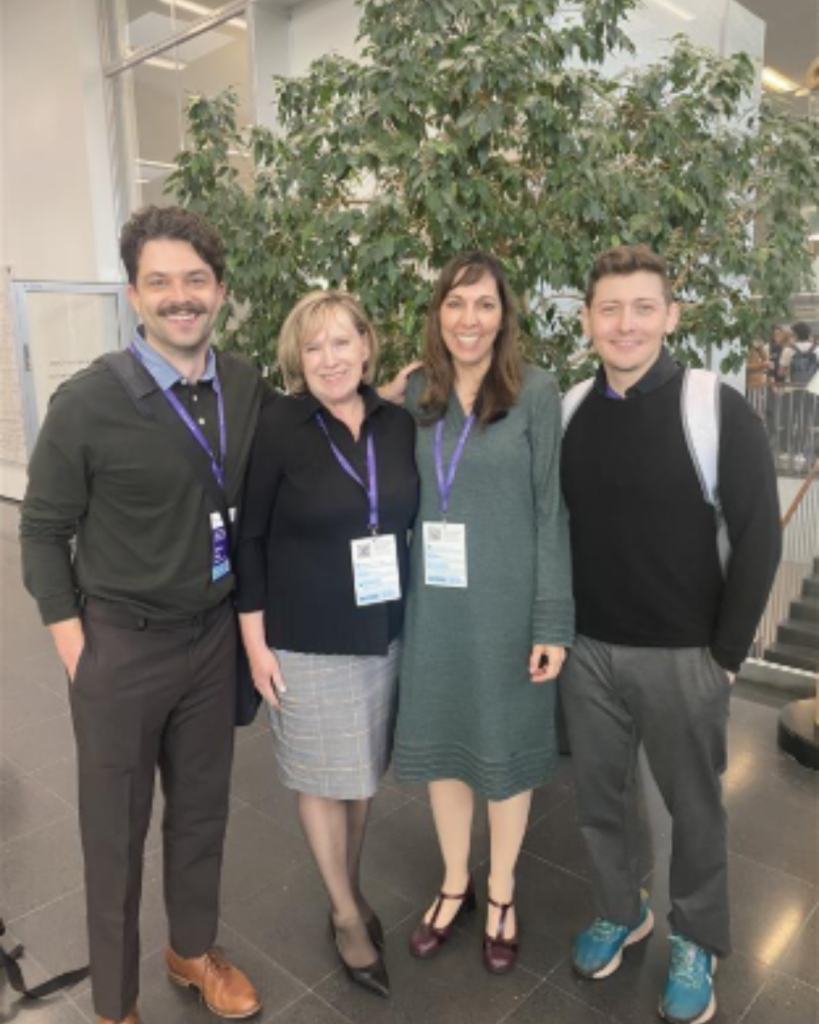
Early in September, James King and Melissa Secord journeyed to join researchers, clinicians, and patient leaders from around the world at Tampere University in Finland to share the latest on celiac disease. Celiac Canada was there—listening, learning, and presenting Canadian data—so you don’t have to wade through scientific slides to get the take-aways. Here’s the simple version: what’s new, why it matters, and how we’ll keep Canadian patients front and centre.
Experts highlighted that many adults don’t get ongoing follow-up after diagnosis—even though some still have silent intestinal damage despite being “strict” on the gluten-free diet. There are no North American clinical practice guidelines thus having clear direction on how to manage adults is a continuing challenge for individuals. Teens (16–18) are especially vulnerable, with more symptoms and lower quality of life, so they may need extra support. James King shared some data on children in Alberta newly positive for the blood test, which showed variation in follow-up testing based on titer levels and geographic residence (e.g., urban/rural status).
What are we doing to help? We need international clinical practice guidelines and personalized follow-up based on risk rather than using the same schedule for everyone. Celiac Canada has advocated over the past three years to work with medicine to get Canadian-based guidelines without success. They are a massive undertaking and very expensive. The International Society for the Study of Celiac Disease (ISSCD) of which Celiac Canada is a member is hoping to lead the development of international standards of practice. Our Scientific Medical Advisory Board has completed an extensive clinical guideline review of what does exist, and we are working towards using this evidence-based review to bring forward recommendations to the Canadian medical community as an alternative.
International studies show that even on a gluten-free diet, kids and families report lower quality of life, especially around emotions and social life. Celiac Canada presented new Canadian findings showing how income, cost, and access to safe gluten-free food—and even workplace stigma—shape quality of life here at home. Our message in Finland: health improves with the diet, but stress, cost, and social isolation don’t automatically disappear. Presentations highlighted the important balance of navigating a strict gluten-free diet while not becoming hypervigilant, as the latter can further strain psychosocial challenges and mental health.
Slips happen (accidental or otherwise), and even careful eaters can have inflammation. At least one in five adults report ongoing abdominal symptoms despite staying gluten-free. Our State of Celiac Disease in Canada study confirms symptoms such as anxiety and depression, easy bruising, insomnia and joint pain persist after diagnosis. That doesn’t mean the diet “isn’t working”—it means we need better support and better tools to track disease activity. While there is no magic bullet of treatment for any chronic disease, the major challenges associated with following a gluten-free diet are what drives the search for non-dietary therapies and clinical trials.
The hot new research out of Australia has identified a new blood-based assay that detects gluten-specific T cells. The team led by Dr. Jason Tye-Din, as we reported last fall, from Sheffield, England, where they extract blood from a patient and then add a gluten sample to the test tube. Within a few hours, the IL-2 blood marker spikes and this is only happening in celiac patients. The small study will be replicated in a larger study, in more centres of which will include Canada. This is an exciting advancement, and we hope this will help us move away from the dreaded gluten challenge. Where this test will be very helpful for those individuals who think they have celiac disease and went on the gluten-free diet without proper testing or those just told to go gluten free. This method could help us greatly improve diagnosis rates which sit around only 15-20%. Many individuals may find that they are indeed not celiac and can look at other issues in their diet as a cause of their symptoms. The IL-2 work is also helping us understand how the disease interacts with the immune system and body and will also contribute to potential treatment pathways.

New European guidelines are coming to allow a no-biopsy diagnosis for select adults with very high, repeat-positive celiac blood tests (building on the approach already used in children). However, clinicians in North America remain cautious on this approach concerned about missing patients or misdiagnoses. Many still consider an intestinal biopsy the gold standard—especially for adults—because it can confirm damage, rule out look-alike conditions, and establish a clear baseline. The bottom line: It’s promising. More research and careful real-world evaluation are needed before Canada would widely adopt a no-biopsy pathway.
Today’s blood tests aren’t perfect—“normal” bloodwork doesn’t always mean the gut is fully healed. Researchers called for new biomarker tools (potentially blood-based) that track disease activity more precisely, so fewer people need repeated biopsies. Scientists are also using “omics” (like proteomics) to craft objective “scores” of disease activity—useful for both patients and future drug trials. Think of it as moving from fuzzy photos to high-definition.
About 20–30% of treated patients still have IBS-like symptoms. There is evidence that a low-FODMAP diet can help to improve these issues in some—but it is important to consider the added demands of another restricted diet and should be guided by a dietitian to avoid nutritional gaps. Many people also have turned to supplements such as probiotics. While there may be some benefit to such supplements, all probiotics are not the same and neither are our microbiomes. This means finding the right “fit” for a specific probiotic is not straightforward and should also be further discussed with healthcare professionals and dietitians. A small percentage of individuals with celiac disease also react to gluten-free oats which may be inducing symptoms.
Oat Research A recent Celiac Canada research grant has been awarded to a team of researchers led by Dr. Ines Pinto Sanchez at McMaster and Shelley Case, registered dietitian (both members of our Scientific Medical Advisory Board) who are working to understand how gluten-free oats should be introduced given this understanding of a small percentage with reactions. Oats are a valuable fibre with lots of micronutrients and a great alternative since gluten-containing grains are missing from the diet.
Scientists talk about a perfect storm that switches on the disease. from genes (HLA-DQ2/8 plus many other variants of these genes), environment, diet, infections, and the gut microbiome. Some microbes may worsen gluten toxicity; others may help by breaking gluten down. The takeaway: it’s complex—and that’s why research matters to locate potential pathways to stop the on switch from ever happening. Longitudinal global studies like the TEDDY and ASK studies that monitor individuals over decades are looking at patterns using medical history, stool, blood, urine and questionnaires to unlock patterns. Individuals willing to participate in these studies is vital to our future understanding.
Several experimental therapies have stalled, but experts think future options may look more like long-acting injectables used in other autoimmune diseases. There are some unique challenges for clinical trials studying therapeutic interventions for celiac disease, but researchers are keen to keep pushing this forward to help improve the quality of life for those affected by celiac disease.
During his presentation, international leader and expert in celiac disease, Dr. Carlo Catassi shared this quote from Marcel Proust. This concept about shifting our perspective accurately captures an overarching theme of the symposium. There was a clear sense among many researchers that in more recent years, and as further scientific pursuits continue in the future, the way we think about celiac disease, how we treat it, and what best practices are for managing the illness are changing—having an open-minded perspective in scientific research is a reason for optimism as it encourages further breakthroughs to improve the health and wellbeing of those with celiac disease.
Bottom line: Research is moving fast toward more precise tests, smarter follow-up, and—down the road—new treatments. Celiac Canada is making sure Canadian patients and researchers have a strong voice in that future.