Latest News from Celiac Canada
Find the french version of the press release below.
One per cent of Canadians have celiac disease – most don’t know it
This Celiac Disease Awareness Month, Celiac Canada wants you to know the hidden symptoms most Canadians ignore
Toronto, ON (May 1, 2026) — Celiac disease affects roughly one per cent of Canadians, yet many are suffering silently because diagnosis of this serious autoimmune disease can take close to a decade.
Celiac disease remains one of the most underdiagnosed conditions in the country. That’s why this May, during Celiac Disease Awareness Month, Celiac Canada is leading a nationwide campaign to help people understand celiac disease’s range of confusing, often hidden, symptoms.
Sponsored by Promise Gluten Free, this year’s campaign, Celiac is a chameleon, highlights how celiac disease can mimic other illnesses, with symptoms from migraines and skin rashes to infertility and depression. For many Canadians, this can lead to missed or delayed diagnosis, and years of suffering.
“Celiac disease looks different in everyone,” says Melissa Secord, Executive Director of Celiac Canada. “It’s not just stomach pain or bloating after eating gluten. It can show up as fatigue, joint pain, migraines, skin rashes, low iron, brain fog — symptoms that easily get mistaken for other health issues.”
Throughout the month, Celiac Canada is encouraging Canadians to:
- Complete the Celiac Canada Symptom Checklist: A quick online tool to help people identify the signs of celiac disease and talk to their doctor about the symptoms they’re experiencing.
- Better understand celiac disease: Free webinars and online content with practical, everyday guidance from experts on living gluten free.
- Get involved: Join local and virtual gatherings across the country to support people living with celiac disease.
- Help find a cure: Give generously to support research, education, and patient support programs.
Early diagnosis and an adherence to a strict gluten-free diet is critical. Untreated celiac disease can lead to serious long-term health complications, including neurological conditions, infertility, and an increased risk of certain cancers.
“Thanks to the generous support of our lead sponsor, Promise Gluten Free, we’re able to spread this important message across the country,” says Secord. “Together, we can help Canadians know the symptoms and start on a path to better health.”
Un pour cent des Canadiens sont atteints de la maladie cœliaque — la plupart l’ignorent
En ce Mois de sensibilisation à la maladie cœliaque, Celiac Canada souhaite vous faire connaître les symptômes cachés qui passent souvent inaperçus
Toronto (Ontario), 1er mai 2026 — La maladie cœliaque touche environ un pour cent des Canadiens; toutefois, de nombreuses personnes souffrent en silence, car le diagnostic de cette maladie auto-immune grave peux prendre près d’une décennie.
La maladie cœliaque demeure l’une des affections les plus sous-diagnostiquées au pays. Dans le cadre du mois de sensibilisation à la maladie cœliaque, qui se déroule en mai, Celiac Canada mène une campagne nationale visant à mieux faire connaître l’éventail de symptômes — souvent atypiques et souvent invisibles de cette maladie.
Commanditée par Promise Gluten Free, la campagne de cette année, La maladie cœliaque est un caméléon, souligne que la maladie cœliaque peut imiter d’autres affections. Les symptômes peuvent varier — des migraines et éruptions cutanées à l’infertilité et à la dépression — et contribuer à des diagnostics manqués ou tardifs, ainsi que des années de souffrance.
« La maladie cœliaque se manifeste différemment d’une personne à l’autre », souligne Melissa Secord, directrice générale de Cœliaque Canada. « Il ne s’agit pas uniquement de douleurs abdominale ou de ballonnements après la consommation de gluten. La maladie peut se présenter sous forme de la fatigue, des douleurs articulaires, des migraines, des éruptions cutanées, une carence en fer ou un brouillard mental — des symptômes qui sont souvent attribués à d’autres problèmes de santé. »
Tout au long du mois, Cœliaque Canada invite la population canadienne à :
- Remplir la liste de vérification des symptômes de Cœliaque Canada : Un outil en ligne rapide qui aide à reconnaître les signes possibles de la maladie cœliaque et à en discuter avec un professionnel de la santé.
- Mieux comprendre la maladie cœliaque : Webinaires gratuits et contenu en ligne offrant des conseils pratiques d’experts sur la vie sans gluten.
- S’impliquer : Participer à des activités locales et virtuelles partout au pays afin de soutenir les personnes vivant avec la maladie cœliaque.
- Contribuer à la recherche d’un remède : Faire un don pour soutenir la recherche, l’éducation et les programmes de soutien aux patients.
Un diagnostic précoce et le respect d’une alimentation strictement sans gluten sont essentiels. Non traitée, la maladie cœliaque peut entraîner de graves complications à long terme, notamment des troubles neurologiques, l’infertilité et un risque accru de certains cancers.
« Grâce au généreux soutien de notre commanditaire principal, Promise Gluten Free, nous sommes en mesure de faire connaître ce message important partout au pays », ajoute Mme Secord. « Ensemble, nous pouvons aider les Canadiens à mieux reconnaître les symptômes et à entreprendre des démarches vers une meilleure santé. »
Welcoming a New Director: Seán Murphy Joins Celiac Canada’s Board
Celiac Canada is proud to announce the appointment of Seán Murphy to its Board of Directors. He will officially begin his two-year term following the AGM this June.
Seán will be a familiar face to many people in the celiac community, having been President of the Edmonton Chapter in 2024-25. In his role on the Board, Seán will serve as the Chapter Operations representative, working to strengthen the network between Celiac Canada and the Chapters and Support Groups across the country.

“I’ve seen first-hand the impact of the information and supports available through Celiac Canada,” says Seán. “I’m looking forward to working with the Board to support people with celiac disease across Canada.”
A retired public servant, Seán has extensive experience in strategic planning, reporting, and performance measurement thanks to his work with the Government of Alberta. His career also includes leadership and executive leadership roles in evaluation, policy, Indigenous education and anti-racism – expertise that will benefit the Board and Celiac Canada.
50/50 Raffle Winner - Congratulations to Laura H. From Hamilton, ON!
Thank you to everyone who participated in our 50/50 raffle! The total pot came out to be $23,610 with the winner taking home over $11,000. Look out for our future raffles.
Help us with an important gluten-free labelling project!
Improving “May Contain” Labels for Gluten‑Free Safety
- Has a “gluten free” claim AND says “may contain wheat”
2. Does NOT have a “gluten free” claim, has no gluten-containing ingredients, BUT says “may contain wheat”
- Take clear photos of the front and back of package
- Add them to the comments or email the products to CCAIntern@celiac.ca
- No need to buy the product!
The Rising Cost of Gluten-Free Living: Why Support Matters
At Celiac Canada, we know that living gluten free is not a choice, it is a necessity. While gluten-free foods have improved in taste and texture, they remain significantly more expensive. A recent Globe and Mail article highlights the financial challenges faced by Canadians with celiac disease and food allergies. Here are the key points:
- Gluten-free products cost 150% to 500% more than regular foods, and prices rose faster during the pandemic.
- Canadians with celiac disease spend thousands more each year on groceries. One individual reported an extra $3,000 annually.
- Overall food prices have increased 27% in five years, with another 4–6% rise expected in 2026.
- Nearly half of families with celiac children struggle to afford gluten-free food, and rural households face even greater challenges.
- Current tax relief options are complex and ineffective, especially for lower-income Canadians.
- Celiac Canada is advocating for a refundable tax credit of $1,000 for adults and $600 for children to help ease the burden.
- Our recent petition gathered 33,000 signatures and will be tabled in Parliament in the new year.
These costs are forcing families to make hard choices, including skipping meals or eating foods that make them sick. We believe no one should have to compromise their health because of financial barriers.
Gluten-Free Market in Charlottetown Brings Relief and Joy to Islanders with Celiac Disease
Hundreds gathered at a special gluten-free market in Charlottetown, offering a rare chance for people with celiac disease to shop without worry. From bread to baked goods, every product was safe to enjoy—no label-checking required. Attendees shared how far access to gluten-free options has come, though affordability remains a challenge. Events like this highlight the growing demand for safe, inclusive food spaces and the sense of community they create.
A Safer Plate for Every Patient: Celiac Canada & Conagra Brands Canada Partner to Enhance Gluten-Free Food Service in Healthcare
Mississauga, ON. July 14, 2025 — Celiac Canada is proud to announce a new partnership with Conagra Brands Canada to support the expansion of gluten-free food service in healthcare and long-term care facilities. This collaboration aims to improve access to safe, high-quality gluten-free meals for individuals with celiac disease and gluten intolerance, ensuring they receive the nutrition they need in institutional settings.
At the heart of this initiative is the Gluten-Free Food Service in Health Care: A Practical Guide, a comprehensive resource developed by Celiac Canada to help food service providers navigate the complexities of gluten-free meal preparation, ingredient sourcing, and cross-contamination prevention. With Conagra Brands’ support, this guide will be widely distributed to healthcare food service professionals, equipping them with the tools needed to provide safe and nutritious meals.
Key components of the partnership include:
- Webinar Collaboration: Celiac Canada and DN Hospitality hosted an educational webinar with Sysco Canada to introduce food service providers to best practices outlined in the guide.
- Co-Branded Gluten-Free Recipes: Chef Daryl Neamtu will develop practical, healthcare-friendly gluten-free recipes to help institutions expand their meal options.
“Many individuals with celiac disease struggle to find safe meal options in hospitals and long-term care settings,” said Melissa Secord, Executive Director of Celiac Canada. “This partnership with Conagra Brands will help drive meaningful change, ensuring that food service providers have the resources and training necessary to safely serve gluten-free meals.”
Through this collaboration, Celiac Canada and Conagra Brands Canada are making a significant impact in the fight for safe, inclusive dining experiences in healthcare facilities. By combining advocacy, education, and real-world solutions, this initiative sets a new standard for gluten-free food service in Canada.
Learn more about the Gluten-Free Food Service in Health Care: A Practical Guide.
About Celiac Canada
Celiac Canada is a national non-profit organization dedicated to improving the lives of Canadians living with celiac disease and gluten-related disorders. Through advocacy, research, education, and support, Celiac Canada works to ensure a better future for those who must follow a strict gluten-free diet for life.
About Conagra Brands
Conagra Brands, Inc. (NYSE: CAG) is one of North America’s leading branded food companies. We combine a 100-year history of making quality food with agility and a relentless focus on collaboration and innovation. The company’s portfolio is continuously evolving to satisfy consumers’ ever-changing food preferences. Conagra’s brands include Orville Redenbacher®, Marie Callender’s®, Hunt’s®, Healthy Choice®, Slim Jim®, POGO®, VH®, Angie’s® BOOMCHICKAPOP®, and more. As a corporate citizen, we aim to do what’s right for our business, our employees, our communities and the world. Headquartered in Chicago and with an office in Mississauga, Ontario, Conagra Brands generated fiscal 2024 net sales of more than $12 billion. For more information, visit www.conagrabrands.ca.
May is Celiac Awareness Month & Celiac Canada is Calling Attention to the Diagnosis Crisis
Throughout May, Celiac Canada has been featured across national and local media as we shine a light on the urgent need to improve celiac disease diagnosis rates in Canada. From TV interviews to online articles and radio segments, our campaign—Celiac is a Chameleon—has sparked important conversations about the often-misunderstood symptoms of this serious autoimmune disease. Explore our recent media coverage below and see how we’re raising awareness, reaching new audiences, and driving change.
Sue Jennett from A Canadian Celiac Podcast hosts Melissa Secord for a sneak peek of our May campaign. Listen Here.
Sue Jennett from A Canadian Celiac Podcast features a May 2025 Roundup. Listen Here.
Julie Greene, Assistant Executive Director, joins Jennifer Palma on Global News Morning Weekend BC to raise awareness about celiac disease. Watch Here.
Walk-a-thon and BBQ on Saturday, June 7 at Assiniboine Park. Read more here.
We’re continuing to track coverage throughout the month, so check back soon for more updates as media across the country join the conversation on celiac disease and the diagnosis crisis.
Celiac Canada Calls on Federal Politicians to Implement Tax Reform for Gluten Free Affordability
Mississauga, ON. March 26, 2025 – Celiac Canada is urging federal politicians to support a crucial tax policy change that will make life more affordable for the estimated 400,000 Canadians living with celiac disease. The organization is calling for improved tax measures that would help offset the rising cost of gluten-free foods, which are often two to four times more expensive than their regular counterparts.
A recent survey conducted by Celiac Canada highlights the urgent need for this change. According to the State of Celiac Disease in Canada survey (n=7500), 52% of respondents said that the cost of the gluten-free diet limits the food they can purchase.
“Living with celiac disease isn’t a choice — yet those affected are forced to pay significantly more just to stay healthy,” said Melissa Secord, Executive Director of Celiac Canada. “We are calling on all federal parties to commit to a fairer tax policy that will reduce the financial burden on Canadians with celiac disease and their families.”
The Need for Tax Reform
Celiac disease is a serious autoimmune disorder that requires strict adherence to a gluten-free diet for life. Unlike dietary preferences, gluten-free food is a medical necessity for those diagnosed with the disease. However, high prices for gluten-free staples like bread, pasta, and flour create financial strain for thousands of Canadian families.
Currently, Canadians with celiac disease can claim the Medical Expense Tax Credit (METC) for the incremental cost of gluten-free food. However, this process is complex, time-consuming, and fails to provide meaningful financial relief for most individuals.
To address this, Celiac Canada is advocating for a flat-rate refundable tax credit of $1,000 for adults and $600 per child with celiac disease. This simplified approach would provide meaningful financial relief while eliminating the administrative burden of tracking individual gluten-free expenses.
In addition to tax reform, Celiac Canada warns that rising global food costs, potential tariffs on U.S. food products and ingredients, and supply chain strain are further driving up prices and availability for essential gluten-free items. Without action, the financial pressure on those with celiac disease will continue to grow.
Celiac Canada is advocating for a simplified and improved tax policy that will:
- Provide direct tax relief for individuals with celiac disease.
- Reduce the administrative burden required to track gluten-free expenses.
- Ensure equitable access to safe and essential gluten-free products.
A Call to Action
Celiac Canada is urging federal political leaders to recognize the urgent need for this change and commit to implementing a fairer tax policy as part of their affordability strategy. The organization is calling on supporters across Canada to contact their local candidates and voice their support for this crucial initiative.
“Making gluten-free food more affordable is a matter of fairness, health, and equity,” added Secord. “We need our politicians to understand that for those living with celiac disease, this is not a lifestyle choice — it’s a matter of survival.”
Celiac Canada issued a community survey on affordability and the tariffs.
- 1,200 people have responded to date.
- 83% of respondents say they are very or extremely concerned that tariffs will expect tariffs to increase the cost of gluten-free food.
- 75% are concerned that tariffs will cause supply issues with access to gluten-free food.
- 42% are considering stockpiling gluten-free food as a result of potential supply issues.
- 5% will consider accessing a food bank or other community provider if the prices continue to increase.
“I’ll stop eating gluten free, but I know I shouldn’t.” – Respondent.
Celiac Canada Response to US Tariffs
We understand the concerns about tariffs on U.S. imports and their impact on access to safe gluten-free food in Canada. Celiac Canada is closely monitoring the situation and assessing how it may affect our community. Please visit the link below to learn more.
50/50 Raffle Winner - Congratulations to ticket number: C-5467
Thank you to everyone who participated in our first 50/50 raffle of the year! The total pot came out to be $16,940 with the winner taking home over &8,000. Look out for our future raffles.
Celiac Canada and The Canadian Association of Gastroenterologists Celebrate Leaders with King Charles III Coronation Medal
QUEBEC CITY, QC – February 27, 2025
Celiac Canada, in partnership with The Canadian Association of Gastroenterologists (CAG), is proud to announce the recipients of the prestigious King Charles III Coronation Medal. Eleven exceptional gastroenterologists will be honoured for their significant contributions to celiac disease research, treatment, and patient advocacy.
Dr. Donald Duerksen and Dr. Elena Verdu will receive their medals at the Canadian Digestive Disease Week (CDDW) in Quebec City on February 28, 2025 during a ceremony with their peers. The remaining doctors will be recognized at local events across Canada along with 40 other recipients by Celiac Canada.
About The King Charles III Coronation Medal
The King Charles III Coronation Medal commemorates Canadians who have made significant contributions to their communities and to Canada. The award acknowledges their dedication and commitment to improving Canadian society, particularly through groundbreaking work in health and advocacy.
2025 Honourees
- Dr. Donald Duerksen
- Dr. Elena Verdu
- Dr. Maria Ines Pinto Sanchez
- Dr. Ralph Warren
- Dr. Derek Butzner (retired)
- Dr. Justine Turner
- Dr. Jocelyn Silvester
- Dr. Dominica Gidrewicz
- Dr. Moshin Rashid
- Dr. Patrick Godet
- Dr. Connie Switzer
“These leaders represent the best of Canada’s commitment to advancing the care and understanding of celiac disease,” said Melissa Secord, National Executive Director of Celiac Canada. “We are thrilled to celebrate their dedication and impact. Dr. Duerksen and Dr. Verdu will be recognized at CDDW, while the other honourees will be celebrated at local events across Canada.”
Award Ceremony
Dr. Don Duerksen and Dr. Elena Verdu will receive the King Charles III Coronation Medal at the opening ceremony of Canadian Digestive Disease Week in Quebec City on February 28, 2025. The remaining honourees will be presented their awards at regional events later in the year.
Learn more about Celiac Canada and the King Charles III Coronation Medal online. Follow Celiac Canada on Facebook, X, and LinkedIn.
Celiac Canada Advocacy with Health Canada and Canadian Food Inspection Agency
Celiac Canada advocates for individuals with celiac disease and their families in a wide variety of ways. Major advocacy initiatives with Health Canada (HC) and the Canadian Food Inspection Agency (CFIA) include recommendations for improving food and drug regulations, surveillance of the gluten-free food supply, research and education. CCA has regular meetings with key individuals in various departments to bring forth our issues and advocate for changes to improve the quality of life for those with celiac disease.
CCA’s Registered Dietitian Working Group (RDWG) is a dedicated group of celiac expert dietitians across Canada. They have developed educational resources for dietitians, consumers, the food industry and others needing practical and evidence-based information on celiac disease and the gluten-free diet.
Also, the RDWG under the leadership of Shelley Case, RD from Calgary, has submitted two detailed consultation documents in response to Health Canada’s proposal to modernize sections of the Food and Drug Regulations. These proposed regulatory changes have major implications for gluten-free foods. Celiac Canada’s concerns were identified and recommendations for enhanced labelling regulations were outlined with extensive references and product examples to demonstrate issues and solutions. Key areas of the consultation documents focused on:
- Strengthening the existing gluten-free regulation
- Clarification on prohibited and allowed ingredients
- Stringent regulations for gluten-free oats
- Fortification of gluten-free foods
- Clear labelling regulations including the use of only one term “gluten free”/”sans gluten” to denote the gluten-free status of an item
- Including all gluten-free regulations in one location in the Food and Drug Regulations so manufacturers can easily find and understand all the requirements needed to produce safe gluten-free foods
These are just some of the many ways that Celiac Canada works tirelessly on your behalf. Please support Celiac Canada so we can continue our mission!
Applications Now Open for Canadian Researchers
|
Celiac Canada Research Awards: Celiac Canada Marks 25 Years of Advancing Celiac Research
Mississauga, ON – November 28, 2024 – Celiac Canada is pleased to announce the recipients of its annual research fund awards and calling for new submissions. The Dr. J.A. Campbell (JAC) Research Grants support innovative projects addressing celiac disease, dermatitis herpetiformis, non-celiac gluten sensitivity, and the socio-economic impacts of these conditions. This fund is Canada’s largest non-governmental source of research funding for celiac disease.
2024 Award Winners
Dr. J.A. Campbell Grant – Utkarshini Kirtikar
The JAC Grant, valued at up to $25,000, has been awarded to Utkarshini Kirtikar, a PhD candidate in Health Sciences at McMaster University. Under the mentorship of Dr. Elena Verdu, Kirtikar’s research will focus on how nutritional interventions impact the gut microbiome in celiac disease. She holds a master’s in nutrition from the University of Leeds, UK.
Kirtikar’s project will investigate whether oral tryptophan supplementation can improve gut health in celiac patients who do not fully respond to a gluten-free diet. By studying how gut microbes metabolize tryptophan and fiber, her goal is to develop cost-effective strategies to enhance the gluten-free diet and improve recovery for non-responders.
Dr. J.A. Campbell Young Investigator Award – Nastasha Lepore
The JAC Young Investigator Award, valued at $5,000, has been granted to Nastasha Lepore, a master’s student at McMaster University and a graduate of the McMaster Pediatric Gastroenterology Fellowship Program.
Lepore’s research examines plasma lipid profiles in children with untreated celiac disease. Using a combined metabolomic and metagenomic approach, she aims to identify lipid metabolism dysregulations. Her long-term goal is to discover biomarkers for early detection and potential therapeutic targets to improve care for children with celiac disease.
The Young Investigator Award recognizes emerging researchers making innovative contributions to celiac disease or gluten sensitivity.
About James A. Campbell
Dr. James A. Campbell made significant contributions to nutrition and his dedicated service to Celiac Canada. Dr. Campbell, who played a key role in federal nutrition departments, joined Celiac Canada (formerly Canadian Celiac Association (CCA)) as a volunteer in 1980, advising on nutrition issues and chairing the CCA’s Nutrition Committee. He was instrumental in establishing gluten-free labeling standards in Canada and conducted the first nationwide study on celiac disease. His work remains foundational to the CCA’s efforts to support the gluten-free community.
In 2025, Celiac Canada will celebrate the 25th anniversary of the J.A. Campbell Research Fund, which has supported over 40 research projects worth half a million dollars advancing understanding of celiac disease and the gluten-free diet. The fund continues Dr. Campbell’s legacy by fostering research and innovation in the field.
Celiac Canada launches federal e-petition to help make life more affordable for people living with celiac disease.
To help draw attention to the unfair tax system for people claiming the incremental cost of gluten-free food in Canada, Celiac Canada launched a federal e-petition with the House of Commons.
The deadline to add signatures is Sunday, November 10 at 4pm ET.
Global News Winnipeg did a feature to help understand the burden of the disease on Canadians.
Follow this link to watch the story.
To learn more about the e-petition and how to complete, follow this link.
Canadian Post Secondary Institutions Fall Short on Gluten-Free Accommodations
Canadian Post Secondary Institutions Fall Short on Gluten-Free Accommodations
Majority of students with celiac disease are not being provided basic food rights
August 27, 2024 (Toronto, ON) – A recent survey conducted by Celiac Canada reveals that Canadian universities and colleges are not providing adequate gluten-free accommodations on campus. The survey, which collected responses from 200 students and parents on 61 different institutions, highlights significant challenges faced by individuals with celiac disease.
Key Findings:
- 70% of respondents reported difficulty accessing gluten-free food on campus.
- The average rating for dining hall experiences was 2.5 out of 5 stars.
- Only 12% of respondents felt that dining hall staff were knowledgeable about celiac disease.
Celiac disease is a chronic autoimmune disorder affecting approximately 1% of Canadians. Individuals with celiac disease must avoid gluten—a protein found in wheat, rye, barley, and regular oats. Improper management of food and ingredients can lead to cross-contamination, causing severe symptoms that can last from hours to days such as digestive issues, migraines, joint pain, and extreme fatigue. For people with celiac disease, even the smallest amount of gluten – just crumbs – can make them severely sick for hours up to days impacting participation in school and extra-curricular programs. Long-term gluten exposure can also increase the risk of complications like anemia, osteoporosis, neurological disorders, fertility issues, and certain cancers.
The experience of Sabrina, a student at the University of Waterloo, exemplifies these ongoing challenges. Despite assurances of safe gluten-free options, Sabrina frequently encountered gluten contamination, which led to severe health issues and affected her academic performance. Although her family has been reimbursed for Fall 2023 board fees, they are still seeking reimbursement for Winter 2024.
Additional personal experiences shared by respondents have illuminated the need for more inclusive food programs on campus:
- “I always had to plan ahead and bring safe food with me. The gluten-free options often ran out halfway through lunch, and cross-contamination was a major concern.”
- “During my tour, I was assured of gluten-free accommodations, but on my first day, I was exposed to gluten.”
“Unfortunately, these stories of struggle are all too common. Access to safe food is a basic right, yet people with celiac disease are often dismissed,” says Melissa Secord, National Executive Director of Celiac Canada. “With increased education and awareness, we can improve these statistics and ensure safe access to gluten-free food.”
Among the universities surveyed, the University of Guelph stood out for its effective strategies and support systems, creating a more inclusive environment for students with celiac disease. Other institutions making notable efforts include the University of Calgary, Queen’s University, and Western University.
Celiac Canada is calling on all post-secondary institutions to take immediate action to enhance gluten-free accommodations and create a safer, more inclusive environment for all students. To support students with celiac disease, Celiac Canada has partnered with Nairn’s to offer comprehensive back-to-school guides for both elementary and post-secondary students. These guides provide essential information on self-advocacy, understanding gluten-free options, and ensuring a safe, inclusive experience.
To access the guides and additional resources, visit Back to School – Celiac Canada
To learn more about Sabrina’s story, click here
Affordability and Tax Fairness Prioritized in Celiac Canada's Pre-Budget Submission
Our Federal Advocacy Working Group made a submission as part of the federal government’s pre-budget consultations.
“Our focus was on our recommendations to change the current incremental medical tax regime for gluten-free foods asking to replace it with a flat, refundable tax credit that does not require collection of receipts,” says committee chair Robert Kramchynsky.
The submission also highlighted our five key recommendations from our State of Celiac Disease in Canada report.

Celiac Canada Speaks on Affordability on CBC and The National
In a recent feature by CBC, the financial burden of maintaining a gluten-free diet was highlighted through the experiences of families living with celiac disease. Angela MacIvor from CBC joined a mother and her two children, all of whom have celiac disease, to compare the costs of seven common groceries and their gluten-free alternatives. The findings were staggering, revealing that gluten-free products can cost 200 to 500 percent more than their gluten-containing counterparts.
Ashley Hickey, a mother from Amherst, N.S., shared her story of managing a monthly grocery bill of $2,600 to feed her family of three, all of whom must adhere to a strict gluten-free diet. Despite efforts to buy in bulk and make meals from scratch, the high costs remain a significant challenge. This situation underscores the need for greater awareness and support for those affected by celiac disease.
For more details, watch the full video on CBC and read the accompanying article.

National School Food Program: New federal program needs to be inclusive
In the recent federal budget and just announced policy, the Liberal party has tabled a new billion-dollar school food program. The 5-year program’s goal is to provide 400,000 additional school children with meal to enhance existing school breakfast programs.
Inez Martincevic, a member of our Dietitian’s Working Group, wrote a letter on behalf of Celiac Canada in response to the announcement.
“As part of developing a national framework to establish a school food program which will ensure that all children in Canada have access to healthy food, it is essential the Minister, in consultation with all relevant governments and stakeholders, include provisions to have a variety of safe, healthy, gluten-free food choices available for children affected by celiac disease across Canada. This will ensure that medical treatment is uninterrupted at school, as well as focus on inclusivity among children with celiac disease, facilitating a positive way to socialize and participate in a trustworthy national school food program.”
Read the full letter below:
Bill C-322
Celiac Canada (formerly known as the Canadian Celiac Association) is delighted to provide comments and recommendations to the House of Commons of Canada regarding “BILL C-322. An Act to develop a national framework to establish a school food program.”
For 50 years, Celiac Canada has been the only national charity in the country solely dedicated to improving the quality of life for people with celiac disease. Through advocacy, education, investments in research and raising awareness, our vision is to have every person in Canada with celiac disease diagnosed and empowered.
Celiac Canada is joined by a dedicated team of medical and food/nutrition experts that play an integral role on Celiac Canada’s Professional Advisory Council (PAC) and Registered Dietitian
Working Group (RDWG). Members of Celiac Canada’s PAC (pediatric and adult gastroenterologists, registered dietitians and scientists across Canada) and RDWG (including clinical dietitians from Sick Kids in Toronto, McMaster Adult Celiac Clinic, as well as dietitians in private practice) have provided valuable feedback and recommendations regarding the proposed BILL C-322.
Background
Celiac disease (CD) is an immune-mediated multi-systemic condition triggered by gluten and related prolamins present in wheat, barley, and rye that occur in genetically susceptible individuals who have the human leukocyte antigen (HLA)-DQ2 and/or HLA-DQ8 haplotypes. It is characterized by an inflammatory enteropathy with variable degrees of severity, as well as a range of gastrointestinal and/or systemic symptoms, in the presence of celiac-specific autoantibodies against tissue transglutaminase 2 (anti-tTG2), endomysium, and/or deamidated gliadin peptide. 1-3
CD is one of the most common autoimmune disorders affecting approximately 1% (reported range of 0.7 to 2.9%) of the general population worldwide, but has been reported to be as high as 2.4% in Canada. CD is diagnosed across all ages, including infants, children and adolescents. Risk of CD is higher among females, as well as in at-risk groups including first-degree relatives and individuals with comorbidities including autoimmune disease, genetic syndromes, and immune disorders. CD prevalence varies between regions across the globe, with racial and ethnic differences. 1-4
CD can include gastrointestinal symptoms, such as but not limited to abdominal pain, abdominal distention/bloating, constipation, diarrhea, loss of appetite, nausea, vomiting and among the pediatric population suboptimal growth and development. CD is also associated with extraintestinal symptoms such as joint pain, arthralgia, fatigue, and headaches. Individuals with CD are at risk of nutritional deficiencies, including iron, folate, vitamin B12, vitamin D, calcium, magnesium and zinc, which further exacerbate growth and developmental concerns in pediatrics. 5-7
The only treatment for CD is medical nutrition therapy (MNT) which is lifelong adherence to a strict gluten-free diet (GFD). A strict GFD requires the avoidance of all sources of gluten from
foods, beverages, supplements and medications, as well includes any amount of gluten exposure from cross-contamination. Lack of adherence to a strict GFD is associated with a persistence of symptoms and/or development of serious health complications. 1-3,7
Individuals with CD experience compromised quality of life related to stressors and barriers associated with living on a strict GFD, including higher gluten-free food costs, increased risk of food insecurity, poor accessibility and availability to safe gluten free foods especially when eating away from home, insufficient food labelling to identify safe gluten-free foods, concerns regarding gluten cross-contamination risks, and negative social and travel experiences on a strict GFD. 8-15
Children and adolescents experience similar but unique age-related challenges living with CD including mental health disorders, such as anxiety, anger, avoidant/restrictive food intake disorder and depression, as well as compromised psychosocial adaptation to living with a chronic condition that requires a significant change to habitual intake and socialization. Poor adherence to the strict gluten-free diet, and in turn overall health, is often associated with feelings of unhappiness, social angst and isolation when compared to similarly aged peers. More so, achieving a healthy gluten- free diet for among pediatric CD is challenging and impacts home, school and social environments. 16-19
Celiac Canada Recommends:
As part of developing a national framework to establish a school food program which will ensure that all children in Canada have access to healthy food, it is essential the Minister, in consultation with all relevant governments and stakeholders, include provisions to have a variety of safe, healthy, gluten-free food choices available for children affected by celiac disease across Canada. This will ensure that medical treatment is uninterrupted at school, as well as focus on inclusivity among children with celiac disease, facilitating a positive way to socialize and participate in a trustworthy national school food program.
Thank you for providing Celiac Canada the opportunity to share important background information about celiac disease, and recommendations for BILL C-322; an Act to develop a national framework to establish a school food program, considering all children in Canada including those impacted by celiac disease.
Sincerely,
Inez Martincevic MSc, RD, Clinical Dietitian, The Hospital for Sick Children;
Member of Registered Dietitian Working Group and Celiac Canada Professional Advisory Council
Shelley Case, RD, Consulting Dietitian; Chair, Celiac Canada Registered Dietitian Working Group Member of Celiac Canada Professional Advisory Council
Melissa Secord, CAE, Celiac Canada Executive Director
Dr. Donald Duerksen, MD, FRCPC, Chair, Celiac Canada Professional Advisory Council
The Great Canadian Giving Challenge is Back!
For the month of June only, every $1 donated to Celiac Canada through CanadaHelps gives us one chance to win one of two $10,000 donations.
This is an exceptional limited-time opportunity for you to help us improve our chance to win the prize. Please Donate Now through CanadaHelps.org and make positive change happen!

Celiac Canada to award King Charles III Coronation Medals
Celiac Canada has been selected as one of 110 Canadian NGOs by Prime Minister Trudeau to participate in the King Charles III Coronation Medal program to celebrate the one year anniversary of his Coronation.
• Celiac Canada has forty medals to distribute to volunteers, staff, donors or industry leaders.
• Selection is open until December 31.
• The honouree must have been alive on the day of the Coronation, May 6, 2023.

The Coronation Medal was created to mark the Coronation of His Majesty King Charles III, which took place on May 6, 2023. It is the first Canadian commemorative medal to mark a coronation.
The Office of the Secretary to the Governor General is responsible for administering the King Charles III Coronation Medal program. The medal will be awarded to 30 000 deserving individuals.
Partner organizations will nominate and present medals to individuals who meet the medal’s eligibility criteria. The list of partners was developed by the Government of Canada. Nominations from the general public will not be accepted. Watch for news on our honourees.
Celiac Disease blood test pilot extended in Ontario
The province of Ontario’s pilot for celiac blood test coverage is continuing for another year to assess uptake of the service.
The official statement says “The Ministry of Health (ministry) is pleased to announce that the Community Access Pilot (pilot) for Laboratory Services will be extended to continue in the 2024-25 fiscal year. The pilot is intended to improve patient choice and increase access to medically necessary laboratory testing services in the community, which would have otherwise been paid out-of-pocket by patients. The current scope and parameters of the pilot remain unchanged at this time.
The 2024-25 Community Access Pilot for Laboratory Services is effective from April 1, 2024, until March 31, 2025. More details on the pilot can be found in the INFOBulletin.”
During the pilot, the test is covered for people older than 2 years who are on a gluten-containing diet. The blood test is not yet covered for ongoing monitoring of people already diagnosed with celiac disease.

Brief to the House of Commons Standing Committee on Transport, Infrastructure, and Communities with reference to the study of accessible transportation for persons with disabilities.
Purpose of the Brief
Pursuant to Standing Order 108(2) and the motion adopted by the House of Commons Standing Committee on Transport, Infrastructure and Communities (TRAN) on Monday, November 20, 2023, the committee commenced its study of accessible transportation for persons with disabilities. Celiac Canada/Coeliaque Canada (CCA) congratulates members of the committee for their initiative in undertaking this study and welcomes the opportunity to present this brief for members of the committee to consider in their deliberations.
We believe that the committee’s mandate extends beyond physical accommodation to include measures that address other health and safety concerns; in this case, the nutritional needs of passengers with celiac disease (CD). Celiac patients face severe health risks when exposed to gluten, a protein found in wheat and related grains. For those navigating air travel, access to safe and readily available gluten-free options is not merely a matter of preference but a fundamental health concern.
By providing gluten-free meals, Canadian airlines and airport restaurants demonstrate a commitment to inclusivity, ensuring a safe and enjoyable travel experience for individuals with celiac disease. This initiative aligns with the broader call for increased awareness and support for those with dietary restrictions, contributing to a more inclusive and accessible travel environment. Celiac Canada proposes a number of recommendations in this brief that will help insure such an inclusive and accessible travel environment.
Celiac Disease
Celiac disease is a serious genetic autoimmune disorder affecting 1:100 Canadian adults and children in which the ingestion of gluten triggers a reaction that results in damage to an individual’s small intestinal tract. This damage impedes the body’s ability to absorb nutrients especially iron, vitamin D, calcium, folate and other B vitamins.
Celiac disease is not an allergy; it is an autoimmune disease, strongly linked with type 1 diabetes and thyroid disease. In addition to gastrointestinal issues, many other organ systems in the body are affected leading to a wide range of symptoms and complications. These can include anemia, chronic fatigue, weight loss, bone and joint pain, easy bruising of the skin, an itchy, blistering skin rash (dermatitis herpetiformis), muscle cramps, osteoporosis, infertility, ataxia (balance issues), migraine headaches, seizures, depression and even some cancers. Inadvertent ingestion of gluten can lead to short-term physical and mental symptoms that can last from hours to days disrupting their work, school or travel depending on the amount ingested or the individual’s immune reaction.
According to our recently launched 2024 State of Celiac Disease in Canada health study, 57.6% adults react to gluten within three hours of exposure. For a majority of the 7,500 study respondents (57.1%) reported symptoms lasting at least one day or longer.
Symptoms include severe diarrhea, cramping, bloating, extreme fatigue, nausea and vomiting along with migraines, anxiety, dizziness, mobility problems and more. The only known treatment for CD is a strict gluten-free diet for life, avoiding wheat, barley, rye and their hybrids. This can be very challenging as in Canadian restaurants and grocery stores, gluten is everywhere; in most processed foods such as bread, cereal, pasta, frozen meals, desserts and crackers.
Gluten is readily found in soups, condiments, salad dressings, processed meat products, plant-based meat substitutes, snack foods, chocolates and other candies. Even unprocessed foods such as corn and oatmeal and inherently gluten-free grains, flours, pulses, flax and hemp seeds may be cross-contaminated with gluten during seeding, harvest, storage, transportation, milling and/or packaging. Not only does a person need to avoid gluten ingredients in foods, but the smallest amount of cross contamination from unsafe food preparation, handling and serving can result in severe illness for an individual.
Because of the constant dietary challenges and the elevated risk of individuals with CD, patients score the highest in perceived disease burden compared to other common chronic diseases (IBS, diabetes, end-stage renal disease on dialysis, congestive heart failure).In the United States, celiac disease is listed as a disability under the Americans for Disabilities Act (ADA). In 2008, the ADA was expanded to include “major life activities” such as eating which means that individuals with celiac disease are covered under the ADA Simply put; the vigilance required to manage CD is in no way being picky, a lifestyle choice, or a trendy diet. It is an absolute medical necessity. Every meal and snack require careful consideration, reading labels, and researching ingredients. This level of caution is necessary because consuming gluten, even in small amounts, can cause severe damage to the individual’s body.
“A cross contaminated meal can have me locked in a bathroom within one hour for 5 hours in severe pain and diarrhea.” – K.B., Ontario
As noted, there is no cure, no magic pill, or injection that can help persons with celiac disease. Given this reality, imagine the challenges of ensuring healthy and nutritious eating when one is in their own home, preparing food in a kitchen that is set up for gluten-free cooking, with a pantry of certified gluten-free food products.
Now imagine, you’re travelling through a Canadian airport, on the plane or on the train, and you’re trying to order a meal you hope will not make you sick. Or worse, you find yourself on a 10-hour non-stop international flight and eat a contaminated meal or there is no food you can order, or it has been forgotten. The challenges of doing so are infinitely greater. Sadly, the choice for over 400,000 Canadians with CD often comes down to taking a chance on a gluten ‘friendly’ meal or literally eating a bag of potato chips.
Scope of the Problem
People with CD have shared their stories with us for years of the difficulties accessing food that is safe to eat while travelling in Canada, and internationally on Canadian carriers. However, we felt that anecdotal evidence was not enough to build a strong case for change in the air travel system.
Therefore, in December 2023, Celiac Canada completed a survey including 1,600 respondents on the availability, and quality of gluten-free meal options in Canadian airports and for in-flight meals. Of these respondents, 85% were diagnosed with CD and 13% were caregivers. Nearly half the respondents were aged 55-79, illustrating that CD is broadly distributed across age cohorts and affects large numbers of younger people. Just one percent (1%) reported excellent gluten-free food options in their travels; 69% said that food options were poor in Canadian airports.
Airports with ‘poor to fair’ options include Regina, Quebec City, Trudeau International, Calgary, Vancouver, Pearson International, Hamilton, Edmonton and Winnipeg. In short, virtually every major airport in Canada. Only 25% of air passengers were able to order a gluten-free meal in advance of their flight; 37% were unable to do so. Of those who ordered such a meal, just 20% reported always receiving such a meal. Nearly 40% never or infrequently received their pre-ordered gluten-free meal for a flight. If their order had been missed or ignored, just 11% reported that the airline could provide this meal on request or provide a similar option in-flight.
Most worrisome, even if one ordered and received a gluten-free meal, cross-contamination is a serious problem; 70% of respondents who pre-ordered these meals and received them, reported them as safe. This leaves a significant number of people who reported eating gluten-contaminated food on flights As noted, eating gluten contaminated food is not simply in an inconvenience; 70% of those receiving a contaminated meal experienced cramps and bloating, 61% reported diarrhea and 45% felt extremely fatigued and nauseous.
Dealing with these symptoms is difficult enough in one’s home; it is torturous and embarrassing in an enclosed, cramped space such as an aircraft, particularly on a long-haul flight In Celiac Canada’s recently released, State of Celiac Disease in Canada Health Report, of 7500 adults with CD, 63.3% feel anxious when travelling and 63.1% worry they will not find gluten-free food.
Survey Feedback Summary
The feedback gathered from the survey highlights significant challenges in accessing gluten-free meal options during air travel in Canada. Personal accounts which we have provided in italics underscore ongoing difficulties and the necessity for enhanced provisions, and understanding from airlines and their staff.
The impact on mental well-being, especially during festive seasons and holidays, is evident as respondents share how not being able to travel has affected their connection with friends and family. The fear of risks associated with gluten exposure has led some individuals to abstain from travel altogether, emphasizing the profound impact on their lives. Moreover, it is crucial for airlines to recognize that individuals with CD may appear visibly to have no chronic condition. Ingestion of gluten can result in severe, rapid adverse effects, including violent vomiting, diarrhea, and exhaustion.
The diverse symptoms reported by respondents, ranging from typical digestive issues to neurological, physical, and emotional challenges, highlight the multifaceted nature of CD Fear and anxiety of contamination and unexpected gluten sources add complexity to managing a gluten-free lifestyle. Negative experiences with airline services underscore the urgent need for heightened awareness and accommodations for individuals with CD in various contexts, particularly in travel.
Top Line Themes in Survey Responses
1. Advocacy for Mandated Gluten-Free Options:
• Respondents express a desire for mandated gluten-free meal options on all Canadian domestic and international flights, as well as in all federal airports.
• The focus extends beyond flights to include the availability of gluten-free meals for purchase within the airport, with a view to passenger equity.
”I want passenger equity. If the airline is going to provide snacks, it must provide snacks to all passengers, and not exclude passengers with a common medical disability.”
2. Challenges in Airport Food Services:
• Acknowledgment of challenges in implementing gluten-free options in airports due to small kitchen areas, making control difficult.
• Some respondents emphasize the importance of offering gluten-free meals not only on flights but also as purchase options within the airport.
3. Equitable Snack Provision:
• Call for equitable provision of snacks, ensuring that passengers with common medical disabilities, including those requiring gluten-free options, are not excluded.
4. Differing Availability Based on Flight Classes: Some respondents highlight the distinction in meal availability, indicating that meals are available in Premium Economy or Business classes but not in other classes on domestic flights.
5. Concerns about Safety and Cross-Contamination:
• Mixed sentiments regarding the safety of consuming gluten-free meals on flights, with some expressing concerns about cross-contamination.
• Requests for proper regulation and labeling to ensure safe handling practices and accurate information about gluten-free options
“The biggest thing is to have options that we know are gluten free and have not been exposed to any cross-contamination. It is very disheartening for anyone, especially a child, when there is nothing they can have on the plane, and everyone around them is eating. If there was not time to purchase snacks like fruit or nuts between connecting flights, it’s a real problem”.
6. Preference for Specially Labeled Food Options:
• Respondents expressed clear preferences for accurately labeled gluten-free food options – clear, bright label for pre-packaged gluten-free meals to clearly identify GF options for flight staff.
• Specialized meals on long flights (over 3 hours) are an absolute necessity.
7. Doubts about Practical Implementation:
• Skepticism about the practicality of ensuring safe, cross-contamination-free, and appealing gluten-free meals on flights.
• Recognition that careful planning and education of airline food service providers is needed.
“I was served a gluten-free meal with a whole wheat bun. There is a trend of gluten-free being part of an allergy free meal which makes it unpalatable. I find European airlines offer much better-quality GF meals. A regular breakfast might include yogurt, fresh fruit or cheese. (In Canada) Gluten free is often a rice cake, a hard bun, margarine for some reason,
and a salt/dairy free flavourless mushy meal.”
8. Negative Experiences Impacting Confidence
• Personal negative experiences, including concerns about safety and unpleasant incidents, lead to reservations about trusting gluten-free meals provided by airlines.
9. Mixed Views on Feasibility:
• Divergent opinions on the feasibility of ensuring gluten-free options without cross-contamination or unappealing quality on flights.
• Recognition of potential challenges for airlines in regulating and maintaining appropriate stock for those who genuinely require gluten-free meals.
Recommendations for Standing Committee Consideration
In proposing the inclusion of gluten-free meals for individuals with celiac disease in airline and airport restaurant offerings, it is paramount to recognize the critical need for accommodation. Celiac patients face severe health risks when exposed to gluten, a protein found in wheat and related grains. For those navigating air travel, access to safe and readily available gluten-free options is not merely a matter of preference but a fundamental health concern.
By providing gluten-free meal options, airlines and airport restaurants demonstrate a commitment to inclusivity, ensuring a safe and enjoyable travel experience for individuals with celiac disease. This initiative aligns with the broader call for increased awareness and support for those with dietary restrictions, contributing to a more inclusive and accessible travel environment.
With improvements in accommodations, Canada can become a “celiac friendly” destination for international travellers, boosting tourism. Flowing from the survey results and personal experiences of those at CCA, we offer the following recommendations for the consideration of the Government of Canada, airport authorities, and the senior management of Canadian airlines that if implemented would significantly improve the travelling experience of persons living with CD, and protect their health while doing so.
1. Enhanced Training for Airline Staff
• Implement comprehensive training programs for airline staff to increase awareness about celiac disease, its severity, and the specific dietary needs of individuals with CD to foster a culture of inclusivity and responsiveness.
• Emphasize the importance of empathy and understanding when interacting with passengers who have these dietary restrictions.
2. Pre-Ordering and Serving Processes
• Require Canadian airlines to always have gluten-free meal options based on a 1% of their passenger manifest available on all flights longer than 3 hours.
• Ensure passengers who have pre-ordered gluten-free receive their meals before being offered to other passengers.
3. Improved Communication
• Streamline and enhance pre-ordering processes for gluten-free meals to minimize communication gaps.
• Develop clear and concise communication protocols between passengers and airline staff to ensure accurate understanding and fulfillment of dietary requirements.
4. Engage Celiac Canada on Preparing Staff Resources
• Celiac Canada would be pleased to prepare resources for airline staff and airport restaurants to gain insights, share best practices, and provide guidance on implementing policies that respond to the needs of individuals with CD with consideration to cost effectiveness.
5. Transparent Labelling and Menu Options
• Work towards implementing transparent labelling of food items on flights and within airport premises, clearly indicating gluten-free options.
• Expand the variety of gluten-free menu options, ensuring availability for passengers in all aircraft classes, not just those in premium classes.
6. Emergency Protocols for Gluten Contamination
Develop and communicate protocols to address instances of passenger gluten contamination during flights, ensuring a prompt and effective response to mitigate health risks for them and other passengers.
7. Regular Audits and Quality Control
• Establish regular audits and quality control measures to assess the effectiveness of gluten-free meal provision, identifying areas for improvement and addressing potential shortcomings.
By implementing these recommendations, the airline industry including airport authorities, can contribute to creating a more inclusive and supportive environment for individuals with celiac disease, ensuring a safer and more comfortable travel experience.
Celiac Canada / Coeliaque Canada thanks the Standing Committee on Transport, Infrastructure and Communities for the opportunity to present this brief.
BRCGS Global Standard Gluten-Free Issue 4 now published
BRCGS is delighted to announce that the new Issue 4 of the BRCGS Global Standard Gluten-Free was published on 05 February 2024, and is available for download from the BRCGS Store or Participate. The result of a detailed and inclusive revision process, Issue 4 presents a strengthened and robust standard that will deliver greater assurance and value to all stakeholders.
First published in 2011, the Standard promotes the use of HACCP principles and a management systems approach, to systematically manage and control gluten in food manufacturing and packing environments. Properly implemented, the Standard provides a very strong level of protection from failure, and if failure does occur, it will enable the rapid identification and management of risks and deviations. There has been a year-on-year increase in the recognition of the Standard, which has seen significant growth in the UK and Europe. The Standard is globally applicable and now has certified sites in 34 countries across the world.
The rigour of BRCGS Gluten-free certification has won the endorsement of a broad network of national and regional associations in the USA, Canada, and Mexico. This allows certificated sites to use the on-pack association trademarks with the highest consumer recognition in their market, such as the ‘Beyond Celiac’ trademark in the USA, the Celiac Canada (CCA) trademark in Canada, and the Acelmex gluten-free trademark in Mexico and Latin America.
New for Issue 4
BRCGS has forged a strategic partnership with the Association of European Coeliac Societies (AOECS). Together, they have benchmarked against the AOECS Standard and innovatively developed an additional Section 8 to the BRCGS Gluten-Free Standard. This collaborative effort empowers certified sites and brands that source from them to display the AOECS’s Crossed Grain symbol on their packaging. This symbol is the most recognized gluten-free emblem across Europe and its neighbouring economies, signifying adherence to stringent gluten-free standards.
Other key changes in Issue 4 include the addition of non-conformity grading, a new section on labelling and pack control, and an extension of scope to include outsourced processing. Changes can also be expected which are designed to simplify the process and provide clarity.
Timeline
As with all revisions of the Global Standards, there must be a transition period between consultation, publication of the complete, finalised Standard and full implementation of the Standard. Therefore:
- Issue 4 will be published in February 2024.
- Certification audits against Issue 4 will commence from August 2024.
Support and guidance
To help sites with the transition to Issue 4, supporting publications and guidance are being prepared, and Issue 4 training courses are anticipated to be available in Spring 2024. Communications will follow in due course with further details.
State of Celiac Disease in Canada: Underdiagnosed, unaffordable, unsafe risk of food: Survey
20 years after first survey, little has changed for hundreds of thousands of Canadians living with celiac disease
Toronto, February 28th Twenty years after the first comprehensive survey of Canadians living with celiac disease, new results show the condition remains largely underdiagnosed, the gluten-free diet is often unaffordable, and many risk being exposed to unsafe food.
“Sadly, the biggest challenges haven’t improved in twenty years – like getting people with celiac disease properly diagnosed early, and ensuring they’re able to afford gluten-free foods that won’t do them harm,” explains Melissa Secord, National Executive Director of Celiac Canada, which funded the survey “State of Celiac Disease in Canada: 20 Years Later.”
“Celiac disease is a common genetic disorder that affects about one percent of the world’s population, but up to 80% still don’t even know they have it. So, they’re living with painful, life-disrupting symptoms and unwittingly causing themselves harm. For those who have been diagnosed, the unaffordable cost of gluten-free foods often means having to skip meals, change the food they purchase or make sacrifices in other areas of their spending.”
Celiac disease is an auto-immune condition triggered by ingesting gluten (a naturally occurring protein) in grains such as wheat, rye and barley. The body attacks itself, damaging the small intestine and resulting in malabsorption of vital nutrients. Damage can lead to a variety of over 260 possible gastrointestinal and extraintestinal symptoms; the top ‘non-gut’ symptoms are now neurological such as anxiety (58.9%), brain fog (57.4%) and headaches and migraines (52.6%). Long delays in diagnosis can cause co-morbidities and early death from complications.
Celiac Canada surveyed 7,500 Canadians with celiac disease on topics like what symptoms they experience, how long they went before being diagnosed, and how they manage living with the disease (eating challenges in social settings, the availability and cost of gluten-free food, and the psycho-social challenges of managing celiac disease).
Among the key findings of the survey:
• DELAYS IN DIAGNOSIS: While general awareness of gluten-free diets as a fad has risen in the last 20 years, there has been no significant reduction in the amount of time it can take for people with symptoms to be properly diagnosed – as long as 10 years, in most cases.
• CHANGING SYMPTOMS: 4 out of the 10 top symptoms in more recent years are neurological (anxiety, brain fog, mood swings/irritability, headaches/ migraines) versus more traditional celiac disease symptoms like bloating, gas and diarrhea.
• AFFORDABILITY: Most respondents (75%) say the cost of the gluten-free is their top concern, which impacts the dietary choices they make. Gluten-free foods can cost from 150% to 500% more than their conventional counterparts, representing an average additional cost of $1,000 per year per adult. Incremental tax relief offered by the federal government is insufficient and complicated– only 20% of respondents have taken advantage of it – and people in the lowest income categories (those who need help the most) don’t even qualify.
• RISK OF UNSAFE FOODS: Three-quarters of respondents (75.5%) who have been in hospitals or care homes say it’s difficult getting gluten-free food in those settings.
• MENTAL HEALTH: More than half reported feelings of frustration and isolation from having to follow a gluten-free diet. They also say it affects their participation in social events and causes stress in food preparation and interactions with friends, family and work colleagues. Respondents continue to be wary of or fear options in restaurants using confusing and unregulated language such as “gluten-friendly” or “gluten aware” menu items.
What can be done to help Canadians living with celiac disease?
1. MORE DIAGNOSIS, FASTER
• Have all provinces add blood tests for celiac disease to the standard requisition used by family doctors.
• Develop and implement new guidelines to improve diagnosis rates and standards of care – to put celiac disease on the radar of front-line family doctors and healthcare professionals.
• Help healthcare professionals better recognize the increasing neurological and mental health signs of celiac disease (neuropathy, migraines, depression, anxiety) and not just the traditional disease symptoms (like bloating, weight loss, diarrhea).
2. HELP WITH THE HIGH COST OF GLUTEN-FREE FOODS
• Introduce a flat-rate federal income tax claim of at least $1,000 per adult and $600 per child to provide true financial relief of the cost burden of the gluten-free diet.
3. ENSURE AVAILABILITY OF SAFE FOODS OUTSIDE THE HOME
• Require all publicly funded health institutions (hospitals, long term care homes, treatment facilities or assisted living homes) to provide adequately funded, safe gluten-free foods.
• Develop regulations for official and standardized allergen and gluten menu declarations in food service delivery (restaurants, facilities, airlines, etc.) to protect all Canadians with medical dietary needs.
• Develop regulations to truly reflect product content and to standardize the acceptable use of “gluten free” on food labels.
• We acknowledge funding support from Takeda Pharmaceuticals, the Ottawa Celiac Canada Chapter, Promise Gluten-Free, and many donors and local CCA chapters for making this happen.
Canada’s first gluten-free food service training guide improves patient health and saves lives.
Feb 2nd 2024
CBC Radio’s Andrew Coppolino reports on CCA’s new Gluten-Free Food Service in Healthcare Guide. Interviews with Doris Foster, lead author and CCA board member. and Linda Sill who’s mother got consistently glutened in long-term care.

Celiac Canada & Sysco make food safer for vulnerable people with celiac disease and gluten disorders in healthcare settings.
FOR IMMEDIATE RELEASE.
TORONTO, January 22nd, 2024. Celiac patients in hospital and long-term care residents who cannot advocate for themselves are often served food containing gluten, which can lead to horrendous symptoms and even death if they’re fed unsafe food for long enough. Tiny amounts of gluten can have severe consequences.
Many healthcare workers and managers have not been trained in gluten-free food service and are unaware food they serve may make those in their care sicker. The guide solves a serious problem that could save lives.
“I wish my mother’s care home workers had the guide to keep her safe. Unfortunately, after repeated cross-contamination she deteriorated rapidly until her death. This guide could save thousands of lives,” hopes Linda Sill of Kitchener, Ontario.
1% of Canadians have celiac disease (CD), an auto-immune condition that triggers the body to attack itself after ingesting gluten from grains like barley, rye, and wheat. CD has 200+ physical and neurological symptoms.
“Given pressures in healthcare, it’s challenging to meet the needs of a variety of diets, and many workers haven’t had the chance to get trained,” explains lead author Doris Foster, who was a Registered Dietitian and Director Nutrition Services in hospitals for many years. “We did a global scan but found very few fully comprehensive, all-in-one training resources for gluten-free food service in healthcare.”
So, Celiac Canada (CCA) created a free guide with downloadable tools that make it easy for managers to teach staff key points. “Learning to serve safe, great-tasting gluten-free food improves patient health and quality of life significantly,” explains Foster.
Canada’s largest food service provider, Sysco is sharing the guide with customers, at healthcare & senior living events across the country and on LinkedIn. “It’s a great tool operators can use to learn how to support this growing dietary challenge,” explains Sarah Emmerton, RD, VP, Healthcare & Senior Living.
The number of people diagnosed with gluten disorders is growing. Celiac Canada plans future resources for the food service sector to help people with CD eat safely when away from home.
ABOUT CELIAC CANADA
CCA is the only national charity championing how to find, treat & cure celiac disease. A world-leader for the best medical, lifestyle and policy solutions that improve access to safe gluten-free food, standards of care, education and research.
Media Contact Marina Michaelides
E: marina.michaelides@celiac.ca
P: + 1 (780) 940 5669
www.celiac.ca
Guide Gluten-Free Food Service In Healthcare – Celiac Canada
ABOUT SYSCO
A global leader in selling, marketing and distributing food products to senior living, acute care, hospitality and retail operations sectors across Canada. With 89 dedicated healthcare associates and 9 Registered Dietitians, the company helps customers succeed.
Gluten-free Food Guide for Children and Youth
The long-awaited Gluten-Free Food Guide for Children and Youth, crafted by Drs. Diana Mager and Justine Turner’s CONQUER Research Team at the University of Alberta, is officially here!
The gluten free diet (GFD) is currently the only treatment of Celiac Disease (CD)..
The gluten-free food guide consists of a gluten-free plate specifically developed to address the nutritional considerations of the GFD for children. As well there are accompanying child-and-parent focused educational materials related to the GFD.1,2 For example, you can read about vitamin D or other micronutrient concerns specific to eating gluten free. You can get some tips for healthy lunch or breakfast ideas for your child. Full story at the link below.
There are ideas for shopping on a budget, accessing food when traveling and more. The gluten-free food guide considers a variety of different GF-ethnic cuisines and additional dietary choices, such as vegetarian, vegan and lactose-free diets

J.A Campbell Award Winners & calls for 2024 applications
James A. Campbell winners to lead study world’s first study on oats for the newly diagnosed.
FOR IMMEDIATE RELEASE.
MISSISSAUGA, January 15th – The winner of Celiac Canada’s 2023 J.A. Campbell Main Grant of $25K has been awarded to Dr. Maria Ines Pinto-Sanchez, a gastroenterologist & Director of the Celiac Clinic at McMaster University. Dr Sanchez leads a nationwide team of top researchers to evaluate the effect of late versus early introduction of gluten-free oats in newly diagnosed patients with celiac disease.
An international review revealed there are no clinical guidelines anywhere in the world about oats for people with celiac disease. Because oats are usually cross contaminated with gluten, eating them can bring on severe symptoms in celiac patients. Yet, gluten-free oats offer vital nutrients, such as manganese, B-vitamins iron that are missing because wheat, rye and barley are off the table. These vitamins are critical for child growth and development.
“This study, the first of its kind in the world, will determine the best clinical approach for the introduction of oats into a celiac diet and ongoing disease management”, explains Melissa Secord, Executive Director of Celiac Canada. “The results are a potential game changer for nutrition therapy for celiacs who have no other cure than a gluten-free diet”.
Celiac Canada (CCA) is now calling for applications for the 2024 research grants – the main J.A. Campbell Research Award and a Young Investigator Award.
Since 2000, Celiac Canada has been the largest single-funder of celiac disease (CD) research dedicating over $430,000 to find, treat and curing the disease. The Dr. J. A. Campbell award is the nation’s only celiac-specific research grant program.
The main award offers a grant of up to $25,000 for research projects of a scientific, and/or medical nature in CD, dermatitis herpetiformis, non-celiac gluten sensitivity or socio-economic or nutrition implications of delayed diagnosis and/or living with these conditions.
The Young Investigator Award bestows $5,000 for research by students who have recently completed degrees/training. The 2023 grant goes to Mark Wulczynski, PhD at McMaster University under the supervision of the internationally acclaimed Dr. Elena Verdu in the department of Medical Sciences. Mark’s study looks at the role of fibre in the small intestine, hoping to lead to potential treatments that reduce inflammation from exposure to gluten.
Lizbeth Wall, Celiac Canada president knows how much research matters. “CD research is severely underfunded compared to many other digestive diseases, let alone mainstream health conditions. There’s often a lack of respect for how serious this autoimmune genetic disorder is, which impacts one percent of the world’s population,” explains Wall. “Thanks to donors, we have been able to take a leadership role in funding Canadian research to help improve diagnosis rates and empower people living with the disease to live better lives and reduce costs to the healthcare system.”
Breaking News. We Won in the Participation Category for the TCS Marathon!!!
Your donations helped Celiac Canada win the third prize of $1700 for largest number of participants in the TCS Charity Challenge Awards. We, a small but mighty charity, are on the podium with the biggest, Canadian Cancer who came first & Sick Kids who came in second place.
Thanks for all you do to help us raise funds to continue to advocate for you and educate you to thrive living gluten-free.

Travel nightmares?
It’s hard traveling with celiac disease when you can’t control your environment. Celiac Canada is asking Canadians to share their airline travel challenges so we can send a submission to a Parliamentary Committee on Canadian airline travel and disabilities. Deadline Dec 18th.
Common Myths around Celiac Disease - Podcast
Listen to Celiac Canada’s Registered Dietitian Caleigh McAulay in discussion with Canadian Celiac Podcast’s Sue Jennett about common myths surrounding celiac disease. From whether CD is an allergy or an auto-immune disease, is May Contain gluten-free, these are must-have tips and knowledge to help you navigate and thrive life with CD.
Protecting our Most Vulnerable - Celiac Canada responds to federal government's Safe Long Term Care Act consultations in support of patient health and safety.
On behalf of Celiac Canada, we are pleased to make a written submission in response to your public consultation into the development of a Safe Long Term Care Act. We represent over 400,000 Canadians with, or at risk of, celiac disease. For 50 years, Celiac Canada (formerly Canadian Celiac Association) – a federal registered charity – has been the only national voice for people with celiac disease, a common lifelong autoimmune condition that impacts one percent of the population.
About Celiac Disease
For a person living with celiac disease, gluten ingestion damages the wall of the small intestine. This damage can lead to a variety of symptoms and results in the inability of the body to absorb nutrients. Following a strict gluten-free diet is the only medical treatment option available for individuals living with celiac disease. There are no pharmacological drugs or medications.
Gluten is a protein found in wheat, barley, regular oats, and rye. Individuals diagnosed with celiac disease may experience immediate symptoms upon consuming a food item containing gluten or one that has been cross-contaminated. These symptoms can vary from mild to severe gastrointestinal discomfort (diarrhrea, vomiting, constipation, severe bloating), skin rashes, joint pain to neurological complications (headaches, migraines, anxiety, tingling, unsteady gate, or depression). Symptoms vary greatly among individuals, but all affect quality of life.
Gluten cross-contamination is a very real concern for people living with celiac disease. Over time, even very small amounts of gluten will cause damage to the small intestine, affecting an individual’s short and long-term health outcomes. Complications from repetitive gluten exposure can include longer term damage such as anemia, non-fatty liver disease, osteoporosis, ataxia and other neurological conditions and even cancer. On a stable, safe gluten-free diet, people with celiac disease can live long healthy lives with similar lifespans of other individuals and avoid the painful conditions and side effects.
Gluten is found in a wide array of foods from sauces, spices, dressings, condiments and more. Fortunately, Canada has robust, internationally recognized standards for food, and now natural health products for labelling to help identify gluten.
Impacts on Long Term Care
As described above, individuals with celiac disease often experience a range of symptoms due to gluten cross-contamination, and these symptoms can be difficult to control, leading to significant distress. For those individuals living in long-term care, cross-contamination may result in increased needs to use the bathroom and/or increased diaper and linen changes, which increases the workload for nursing and care staff. Symptoms could also result in an increased need for urgent toileting, thereby increasing fall risk. Additionally, if gluten cross contamination occurs, it can manifest as gastrointestinal symptoms, potentially necessitating isolation while diagnostic tests are conducted. Isolation can contribute to feelings of depression or anxiety for the resident, further decreasing quality of life measures.
The right to safe food is a foundational element of human rights, crucial for the overall well-being of all individuals living in Canada. Safe food not only supports physical health but upholds the principles of human dignity and equality. Those living in long-term care should not live in fear that the food they are provided with may cause harm or illness. And of equal importance, they should not be denied access to care because the long-term care home feels they cannot accommodate a gluten-free diet, which has happened to many in our community.
There needs to be equal access to specialized therapeutic diets for all disease states and religious requests in Canada. Just as individuals with diabetes and heart disease have access to safe, therapeutic diets, or individuals with religious beliefs granted their specific food preparations, people living with celiac disease should be granted the same opportunity. Gluten free is not a choice.
Accessing facilities has also been a concern for our community. We have individual stories of families being turned down or refused care because of the facilities’ simple lack of knowledge of celiac disease.
How Can the Federal Government Help?
Funding is a big concern. In British Columbia, food budgets include an allowance of $7.78 per resident. This is very low and often this funding is not increased commensurate with inflation. Despite the higher cost of gluten-free products, no extra funding is allocated. Based on recent research conducted by Celiac Canada, it was found that following a gluten-free diet can cost over 200% more than a regular diet. Low funding levels impact the safety, quality and potentially the nutritional adequacy of food service for those with celiac disease in long-term care.
When living in a facility where meals are prepared by others, it is imperative that the staff providing meal service have education to ensure meal service is gluten-free as well as education regarding how they can make meal service palatable and enjoyable for residents with celiac disease.
Our objectives to improve the quality of life for celiacs in long-term care align with the patient-centered approach advocated for by the proposed Safe Long-Term Care Act. This includes the need for a high-quality standard of care, ensuring the safety of all clients, and promoting equity and accessibility to healthcare services.
To realize these objectives, we ask that you achieve results for Canadians by supporting the following commitments:
- Ensure Adequate Funding for Food Service Staffing and Food Budgets: On average, the gluten-free diet is 200% more expensive than a general diet and takes more care and time to prepare. To ensure safe and palatable food, and nutritional adequacy, additional funding needs to be allocated for both food supplies and staffing. Food budgets need to rise annually with the Consumer Price Index. Companies that supply food to long-term care facilities can accommodate pre-packaged gluten-free food that is even certified gluten free for facilities with appropriate funding.
- Make Education Regarding Gluten-Free Meal Service Mandatory for Food Service and Other Staff in Long-Term Care: Working with Celiac Canada, launch an education program for all long-term care food service and clinical staff who have role in providing food service to residents with celiac disease. This includes education on gluten sources, how to prevent cross-contamination and how to make food service palatable and enjoyable for these residents. Celiac Canada has recently developed education resources for the healthcare sector. Make this, or similar education, a mandatory part of training.
- Enforce Mandatory Accreditation for all Provinces and Territories: Hold facilities accountable for patient safety, quality, equity and accessibility. As part of accreditation, ensure that the requirement to provide all medically required diets are met. Suggestions include, but are not limited to, checking menus for dietary compliance, ensuring preparation and cooking areas minimize gluten contamination, and ensuring that all staff members have completed all necessary dietary education modules.
- Implement Indicators of Long-term Dietary Compliance: Not every patient with celiac disease is symptomatic when exposed to gluten. Therefore, another marker to ensure facility compliance and patient safety is required. One of our current monitoring tools is an annual TTG-IGA level. For clients with celiac disease, it is our recommendation that this blood work become part of their annual medical review to ensure safe foods are being provided.
- Ensure Inclusivity in Gatherings: Ensure gluten-free offerings at all facility events that have food offerings, including, but not limited to tuck shops, snack wagons, parties or other celebrations.
- Ensure Variety: Ensure that those requiring a gluten-free diet meet the same rotational meal standards of other residents. By doing so, this will also ensure that a variety of nutrients are being offered and residents do not develop ‘menu fatigue’, a contributing factor to weight loss.
- Ensure that the Gluten-free Diet has Texture Modified Options: These modified options need to provide choice, variety, and palatability to optimize intake and quality of life.
- Ensure that Menus are Planned by a Professional: Professionals include Registered Dietitians or members of the Canadian Society of Nutrition Management, with the education, knowledge, and skills to plan a safe, nutritious, and varied menu that meets the needs of residents.
By addressing the above issues and working together with Celiac Canada, we can significantly enhance patient-centered care and the quality of life for individuals with celiac disease living in long-term care. We will also promote inclusivity and optimize health status.
Thank you for your attention to this very important within our community.
Sincerely,
Melissa Secord, CAE
Executive Director
Celiac Canada
Sunflower Festival
Rows and rows of beautiful, inspirational Sunflowers meet rows and rows of gratitude for the Davis Farm Family’s ongoing and never-ending support of Celiac Canada. Thank you for raising $11,246 during your recent Sunflower Festival!

Future Food Regulatory Modernization Priorities Public and Stakeholder Consultation
July 26, 2023
Celiac Canada (formerly known as Canadian Celiac Association) is pleased to respond to Health Canada’s consultation on the Future Food Regulatory Modernization Priorities.
For 50 years, Celiac Canada has been the only national charity in the country solely dedicated to making life better for people with celiac disease and gluten disorders. Through advocacy, education, investments in research and raising awareness, our vision is to have every person in Canada with celiac disease diagnosed and empowered.
Two key priorities (#1 and #10) outlined in the document are of utmost importance for the celiac community in Canada.
Foods for Special Dietary Use
B.24.018
Consumers with celiac disease and other gluten related disorders must follow a strict gluten-free diet to safely manage their condition, prevent health complications and maintain optimal health and well-being. It is essential they can determine from the label that a product is truly gluten free. Regulations and marketing must apply for products sold at retail and online especially since more individuals are purchasing products online.
Celiac Canada has conducted surveillance data on product labelling claims sold in store as well as online. There are a wide variety of claims being used such as:
- Gluten free
- No gluten
- Made without gluten
- Gluten friendly
- Without gluten
- Made with no gluten-containing ingredients
- Not made with gluten-containing ingredients
Individuals with celiac disease and others following a gluten-free diet have difficulty interpreting various labelling claims about gluten and are often confused whether the products are in fact gluten free and safe to consume. This is especially difficult for those where English or French is not their first language. Feedback from consumers have indicated they want one consistent claim – namely “gluten free” “sans gluten”.
Also, B.24.018 does not mention a specific threshold of gluten permitted in a food with a gluten-free claim. Health Canada’s Position on Gluten-Free Claims does state:
“While no specific threshold is mentioned in the Regulations themselves, the best currently available scientific evidence indicates that levels of gluten below 20 ppm in gluten-free foods would be protective of the health of the vast majority of people with Celiac disease. This level is recognized internationally in the Codex Alimentarius Standard for Foods for Special Dietary Use for Persons Intolerant to Gluten ( Codex Stan 118-1979) which states that the gluten content of foods labelled gluten free shall not exceed 20 ppm.”
Manufacturers, especially those smaller in size, often do not understand that making a gluten-free claim requires strict manufacturing practices to prevent cross contamination and ensure products are safe and under the 20 ppm gluten threshold level. It would be very beneficial to include the gluten threshold in B.24.018 so it is clearly stated and easily found by manufacturers reading the FDR. Currently manufacturers would have to find the above web link to know this specific information.
RECOMMENDATIONS:
- Celiac Canada strongly urges the government to permit only ONE labelling claim to meet B. 24.018. It should be “gluten free” “sans gluten”. This should be declared in a revision of B.24.018.
- Celiac Canada also recommends that the gluten threshold level be declared in B.24.018 so manufacturers clearly know and understand the need for strict food production requirements to prevent gluten contamination and ensure the product is gluten free.
Fortification of Gluten-Free Foods
Individuals with celiac disease and other gluten related disorders often are not able to achieve optimal nutritional status on a gluten-free diet for a variety of reasons. Many gluten-free products are low in dietary fibre, iron, B vitamins and other nutrients as they are made with refined flours and starches. Also, these products are not typically enriched or fortified with iron, folic acid and other B vitamins like their gluten-containing counterparts. This is because there are no mandatory regulations for fortification of gluten-free products.
An accompanying PowerPoint with our written submission provides further background information about the nutritional status of individuals with celiac disease and other gluten related disorders who are following a gluten-free diet. It also highlights the differences in nutritional content of gluten-free foods compared to gluten-containing products that are fortified.
D.03.003 Section D.03.002 does not apply to a food, other than a supplemented food, if all of the following conditions are met:
- (a) the food is:
- (i) a gluten-free food referred to in paragraph B.24.003(1)(g), or
- (ii) represented for a special dietary use referred to in paragraph B.24.003(1)(h) or (i);
- (b) no standard is prescribed in these Regulations for the food; and
- (c) the food is not advertised.
Gluten-free foods fortified according to the provisions of section D.03.003 of the FDR may not be advertised to the general public. These fortified foods may be sold at retail but may not be advertised by the store or the manufacturer to the general public. They may be advertised in magazines, newsletters and other materials targeted to individuals with celiac disease and/or to those who are on gluten-restricted diets.
Note: Other foods labelled as gluten free (those that are not fortified or those fortified in accordance with FDR D.03.002) may be advertised to the general public.
RECOMMENDATIONS
- Celiac Canada strongly recommends mandatory fortification of gluten-free breads and other baked products using gluten-free flours and grains; as well as cereals and pasta to the same fortification levels as gluten-containing breads, baked products, cereals and pastas.
- Celiac Canada strongly supports the removal of clause (c). Manufacturers should be permitted to advertise that their gluten-free products are fortified or enriched to all consumers who purchase gluten-free products. This is important so consumers can make informed decisions and choose products with higher nutritional value.
Communication tools have changed and “magazines, newsletters and other materials targeted to individuals with celiac disease and/or those who are on gluten-restricted diets” are being used less frequently. As Celiac Canada, a small national charity that is no longer a membership based driven organization, not all consumers following gluten-free diets receive their information from Celiac Canada and utilize a wide variety of sources especially social media and other online sources for information.
Health Canada’s priority list does reflect many important issues that need to be addressed. We also feel there are several other key issues that should be included in the priority list:
- Health Canada needs enhanced guidance document for the use of precautionary allergen and gluten labelling. Celiac Canada has been asking for over 10 years to improve the information from Health Canada on the use of precautionary labelling as there has been no updates since 2012. Manufacturers need more guidance on this subject. The celiac and allergy communities have seen an increase and overuse of precautionary statements such as “May Contain X,Y,Z”, “Made in a facility that processes X,Y,Z”, “Made on shared equipment that processes X,Y,Z”. This greatly reduces the availability of a wide range of food products for these consumers. https://www.canada.ca/en/health-canada/services/food-nutrition/food-labelling/allergen-labelling/use-food-allergen-precautionary-statements-prepackaged-foods.html
- The Temporary Marketing Authorization permitting specially processed oats to make a gluten-free claim should officially become a regulation. Celiac Canada also conducted a large surveillance of oat and oat-based products with a gluten-free claim sold in stores and online. Unfortunately, there was a wide range of gluten labelling claims that were confusing to consumers and many manufacturers did not follow all four (4) parts of the marketing authorization requirements or understand the requirements.
- Regulations should be developed for mandatory declaration of allergens and gluten sources in medications. The allergy and celiac disease communities have been requesting this for a very long time. It is essential that these consumers know if their medication contains allergens or gluten sources to prevent severe reactions that can be life threatening or result in a wide range of symptoms leading to poor health. The USA has a bipartisan bill (H.R. 4263) currently under discussion to require major food allergens and gluten sources to be identified in medications.
- Address the regulation gaps in online retail sale of food by requiring all sellers to ensure online product package labels are equal to those sold in-store. Consumers must have access to the same information when buying in person or online to make informed safe choices and to avoid costly returns, illness or wasted products. Recommendations would include displaying the full ingredient label image, including any gluten-free claims, along with listing ingredients by text with the product description.
- Canada falls short behind European guidelines requiring restaurants to separately list and identify on menus which of their items contain gluten or allergens as per existing Canadian regulations. Terms would need to be regulated and the use of terms such as “gluten friendly” not permitted. Restaurants would not be required to provide gluten-free or allergen-free meals but give consumers greater choice and better able to assess their risk of potential illness.
- As Canada moves towards innovative food packaging that reduces environmental impact by reducing plastics and using more biodegradable sources, consideration must be given to packaging options that do not use gluten-based ingredients as alternative sources of materials. We encourage Health Canada and the consumer protection branch to consult with Celiac Canada and Food Allergy Canada along with industry on any regulations to ensure public safety.
Celiac Canada’s top 5 ranked items:
- Mandatory fortification of gluten-free foods and removing the advertising restrictions in D. 03.003
- Foods for special dietary use – B. 24.018 revisions
- Enhanced guidance documents for the use of precautionary allergen and gluten labelling
- Mandatory declaration of allergens and gluten sources in medications
- Proposed new regulations for menu labelling
Thank you for the opportunity to provide feedback to this consultation.
Celiac Canada welcomes a new All-Party Celiac Caucus
New caucus will contribute to improving lives of Canadians with celiac disease.
June 20, 2023, OTTAWA, ON
Celiac Canada congratulates Parliamentarians on the creation of the first-ever All-Party Celiac Caucus. The new caucus follows the first-ever gluten free breakfast on Parliament Hill on May 1, which introduced Parliamentarians to the challenges faced by Canadians as they live with this chronic disease.
Celiac disease is a genetic, chronic autoimmune disease that afflicts one percent of people in Canada. When an individual with celiac disease consumes even the smallest amounts of gluten (a protein found in wheat, rye, barley and cross-grains), the body develops an immune response that destroys the lining of the small intestine. The resulting damage hinders the body’s ability to absorb key nutrients for overall health. There is no cure, and the only current treatment is a strict gluten-free diet for life.
“For Canadians with celiac disease, the only treatment available is a strict gluten-free diet. This comes with considerable financial, health and social costs. We hope that through the All-Party Celiac Caucus, we can develop and advance policy solutions that help to enhance the quality of life for all Canadians with celiac disease,” said Melissa Secord, Executive Director, Celiac Canada.
The inaugural Celiac Caucus meeting was held on June 19. The caucus will focus on deepening awareness and understanding of the challenges of celiac disease and advancing solutions to that help Canadians live and thrive with celiac disease.
“Celiac disease is a serious autoimmune disorder that needs greater attention in Canada. I am proud to co-chair this new caucus and work together with my Parliamentary colleagues to increase awareness, promote research and improve the live of those affected,” said Sonia Sidhu, MP and co-chair of the All-Party Celiac Caucus.
At the meeting, MPs engaged Celiac Canada leadership and with two Canadians living with celiac disease – Christine Nesbitt, former Olympian and multiple World Champion Long Track Speed Skater, and Jennifer Palma, Global BC TV anchor. Celiac Canada also facilitated a presentation from Dr. Maria Pinto Sanchez, member of Celiac Canada’s Professional Advisory Council Gastroenterologist and Clinician Nutrition Specialist at McMaster University and Hamilton Health Sciences. Celiac Canada will continue to engage with caucus leaders MPs Sonia Sidhu, Tim Louis, Ziad Aboultaif and Senator Marie-Françoise Mégie as well as the all-party caucus members to address celiac disease awareness, diagnosis, research, and treatment support.
View MP Sidhu’s June 20, 2023 Statement on Twitter: https://twitter.com/SoniaLiberal/status/1671159800712040451?s=20
Celiac Canada responds to improve labelling of non-prescription medications
May 11, 2023
Health Canada is proposing new targeted provisions and regulatory amendments to the Food and Drug Regulations and Medical Devices Regulations as part of their modernization work. Celiac Canada has been invited to review this proposal and as such, would like to put forward the following suggestions on behalf of our community.
Why are we participating?
For 50 years, Celiac Canada has been a national charity advocating, educating, and supporting individuals with celiac disease and gluten disorders.
People with celiac disease must follow a strict, lifelong gluten-free diet as this currently is the only medical therapy available to them. Celiac disease is a genetic autoimmune condition that develops when a patient’s small intestine mounts an immune response to the ingestion of gluten – a protein found in wheat, rye, barley and their crossbred grains. Exposure to small amounts of gluten can occur when food or medication is contaminated but even these small amounts can result in small intestinal damage caused by this immune response.
Short term implications of ingestion of gluten can include severe diarrhea, bloating, anxiety attacks, headaches and migraines, extreme tiredness, and vomiting. These can result in lost time at work, impact on quality of health and emergency hospitalizations. Long term exposure to gluten can result in cancers of the gastrointestinal tract, chronic diarrhea or constipation, neurological conditions including ataxia, osteoporosis, fertility difficulties, anemia, and development of autoimmune disorders (such as Type 1 diabetes mellitus, rheumatoid arthritis and thyroid disease as just some examples).
Based on the above symptoms and disease associations, many individuals with celiac disease consume higher numbers of non-prescription and prescription medications than average Canadians to maintain their health. For example, patients whose gluten exposure results in chronic joint pain may ingest more and frequent pain relief medication. Seniors or individuals with multiple medical conditions are required to take many medications – it there is gluten present in these medications, they may be at risk for significant gluten exposure. After a cross-contamination issues, some patients rely on over the counter or non-prescription remedies to address their symptoms for short term relief.
In Canada, a food/additive is considered gluten free if the gluten content is less than 20 parts per million. This threshold is necessary to avoid gluten exposure that would damage the lining of an individual’s small intestine.
Ensuring that both non-prescription and prescription medications are clearly labelled with priority allergens and gluten-containing items ensures the short and long-term safety of our community.
Celiac Canada is in full support of updating these amendments as it would benefit the health of the one percent of Canadians that are affected with celiac disease.
Recommendations
As with current Health Canada Food and Drug Act, it is required that common allergens and gluten sources always be clearly declared on licensing drug labels when present as ingredients or components of ingredients. We request that they appear in the nonmedicinal ingredient list located immediately after the medicinal ingredient list and be written in their common name.
Of specific note we would like to point out the following suggestions:
1.2 “The nonmedicinal ingredients must be listed in alphabetical order or in descending order of predominance by their proportion in the drug, preceded by words that clearly distinguish them from the medicinal ingredients.”
- We completely endorse the recommendation to list the nonmedicinal ingredients. It is our suggestion that nonmedicinal ingredients only be listed in descending order of predominance in the drug and for alphabetical order to be restricted. For the purposes of our community, understanding how much of a potential allergen or gluten-containing product is represented within a medication is important for risk assessment.
4.2 Absence of Ingredients
“Consumers and patients may be concerned about the health implications of certain medicinal and non-medicinal ingredients in drug product formulations (e.g., sugars, salts, -sulfites). Manufacturers/sponsors may selectively refer to the absence of certain ingredients under particular conditions (e.g., no ingredient X, no X, non-X, X-free).
When an ingredient has been removed from drug products in Canada because of safety concerns, it is acceptable to include a statement to the effect that a drug has been reformulated to omit that ingredient or that the drug product does not contain that ingredient. Such statements are considered acceptable for a limited time (e.g., one year), but after a certain period they lose meaning as the unacceptable ingredient is no longer found in other products.”
- We would like to clarify if this includes the term, ‘gluten free’. We suggest that this term only be used if a product has been tested and meets the current standard of <20ppm with which food products must comply. This ensures consistency with current requirements for packaged foods and the new Natural Health Product regulations.
Inno Foods Becomes First Company to Display Celiac Canada's NEW Trademark on Packaging



April 12, 2023
Inno Foods, a leading food manufacturer based in British Columbia, has become the first company to proudly feature the new Celiac Canada trademark on their packaging. This move comes as part of Inno Foods’ commitment to providing safe and delicious gluten-free options for individuals with celiac disease or gluten sensitivity.
The Gluten-Free Certification Program (GFCP), launched over 10 years ago, aims to provide consumers with a trusted and reliable way to identify gluten-free products. With the increasing demand for gluten-free options due to the rising awareness of celiac disease and gluten sensitivity, the Program helps Canadians make informed choices about the foods they consume. This year, Celiac Canada changed its name from Canadian Celiac Association, and revised their GFCP trademark to reflect this change.
Inno Foods, known for its innovative and high-quality food products, has long been a pioneer in the gluten-free industry. The company’s products, including popular snacks like coconut clusters and chocolate bark, have gained a loyal following among gluten-free consumers who are looking for tasty and safe options.
“We are thrilled to be the first company to showcase the new Celiac Canada trademark on our packaging,” said David Chung, President of Inno Foods. “As a company that prioritizes the health and well-being of our consumers, we believe it’s crucial to provide them with the information they need to make informed choices. This certification helps us further demonstrate our commitment to producing safe and delicious gluten-free products.”
The GFCP involves rigorous testing and verification processes to ensure that products meet strict gluten-free standards. This includes testing for gluten levels below 20 parts per million (ppm), the internationally recognized threshold for gluten-free labeling. Manufacturers that pass the certification process are then allowed to display the Program’s trademark, providing a clear indication to consumers that their products are gluten-free and meet the Program’s standards.
“The GFCP helps Canadians with celiac disease or gluten sensitivity identify safe food choices quickly,” said Melissa Secord, Executive Director of Celiac Canada. “We are thrilled to have Inno Foods as the first company to feature our revised trademark on their packaging. Their commitment to providing gluten-free options and their dedication to consumer safety is commendable.”
Inno Foods’ decision to participate in the GFCP is part of their ongoing efforts to prioritize consumer safety and meet the needs of their gluten-free customers. By displaying the Program’s trademark on their packaging, Inno Foods aims to provide reassurance to consumers and promote transparency in the gluten-free food industry.
As the demand for gluten-free options continues to rise, the GFCP and companies like Inno Foods are playing a vital role in ensuring that consumers have access to safe and delicious gluten-free products. Inno Foods featuring the Program’s trademark on their packaging sets a positive example for other food manufacturers and reinforces their commitment to providing high-quality gluten-free options for all.
New free celiac blood tests could benefit 128,000 Ontarians and save $1 billion
Celiac Canada hails Ontario government decision
March 30, 2023, Mississauga, ON – The provincial government’s decision to make simple but crucial blood tests for celiac disease available at no cost to patients will improve the quality of life for as many as 128,000 Ontarians and potentially save Ontario’s health care system as much as $1 billion1, Celiac Canada said today.
“Finally, the approximately 128,000 or more people in Ontario with celiac disease – who don’t even know they have it – are a giant step closer to diagnosis and treatment. This is a watershed moment, one which will benefit tens of thousands of people who can now finally get answers about what has been ailing them for too long,” said Celiac Canada’s National Executive Director, Melissa Secord.
“Our government is making critical investments to connect you to the care you need, closer to home,” said Sylvia Jones, Minister of Health, and Deputy Premier of Ontario. “Ensuring patients can receive celiac tests, at no cost to them, means faster and easier access to a diagnosis and treatment for Ontarians across the province.”
As of this week, family doctors and other health services providers are being notified that the blood test for celiac disease is now included on the list of other screening tests paid for by the Ministry of Health.
Celiac disease – a genetic autoimmune disorder where gluten, a protein found in wheat, rye and barley, causes an inflammatory response damaging the intestinal lining – frequently goes undiagnosed. Until now, the cost paid by the patient for the blood test was $100-$150, and proved to be a deterrent for many Ontarians on low or fixed incomes. Celiac disease is genetic, so the potential cost to a family of four to get screened was over $400.
It’s estimated that 1% of the population is at risk, and 85% of those people – representing 128,000 Ontarians – have celiac disease but are undiagnosed. Delays in diagnosis of celiac disease can lead to malnutrition, osteoporosis, neurological problems, reproductive issues, arthritis, other autoimmune diseases, and even cancer.
To better understand your risk for celiac disease and to take our Symptom Quiz, visit www.celiac.ca.
-30-
Celiac Canada’s vision is to see every person in Canada with celiac disease diagnosed and empowered. Since 1973, the CCA has been increasing awareness of the disease, investing in research and providing programs to support people with gluten disorders across Canada.
Media Enquiries
Bob Reid 416-258-2856
1] Calculations are based on 128,000 Ontarians estimated to be undiagnosed with celiac disease over 10 years factoring in cost of treatment of average health complications.
Listen to Melissa Secord speaking with Global News Radio Network on Thursday, March 30, 2023. This interview aired on AM 640 Toronto, CHML 800 Hamilton and CFPL AM 980 in London, Ontario.
Federal budget falls short for Canadians suffering with celiac disease and their rising gluten-free grocery bills.
Updated: April 23, 2023 with percentages corrected in examples.
March 29, 2023, Mississauga, ON – The Government of Canada has tabled its 2023 budget, which provides some temporary relief in the way of a Grocery Rebate as part of the GST/HST tax credit for all Canadians who are on the lower income scale and need assistance. Unfortunately, it falls short – 150% short – for the needs of people afflicted with celiac disease – a lifelong autoimmune disease – who must adhere to a strict gluten-free medical treatment to survive.
The government proposal for the maximum amount under the Grocery Rebate would be: $153 per adult; $81 per child; and $81 for the single supplement.
Gluten-free packaged food products are on average from 150% to 500% higher than their regular gluten-containing equivalents. For an average home, the cost of a gluten-free diet is on average $1,000 per adult more than a household that does not need to be gluten free.
For people in Canada who are fiscally disadvantaged but who are medically required to eat gluten free, the cost of groceries will either force them to seek assistance from food banks (who may not always have gluten-free food available) or consume cheaper, gluten-containing food that will make them sick. Gluten exposure not only leads to the serious health consequences of celiac disease, which can include chronic diarrhea, painful rashes, anemia, exhaustion, and depression; it also increases hospitalizations, and lost time at work and at school. Chronic exposure to gluten can lead to cancers of the gut, canker sores and tooth erosion, increased serious neurological complications, infertility, liver damage, early onset osteoporsis (increased risk of falls) and more.
Celiac Canada is asking the Government of Canada to provide people diagnosed with celiac disease with an increased benefit of $230 per adult and single supplement and $122.50 per child.
While this is a far cry from the true cost of a gluten-free groceries for a Canadian family in one year, it would be a start toward recognizing the impact of this serious medical condition on people in Canada who suffer from the disease and are economically disadvantaged.
To illustrate the difference in common grocery products for a person with celiac disease compared to an average Canadian:
Gluten-free bread:
- $6.97 for 400 g loaf vs. $3.37 per regular white loaf at 675 g.
- $0.017 per g vs $0.005
- 240% more expensive per gram
Gluten-free pasta:
- $4.29 for 340 g box vs $0.97 for a 210 g box for a store brand pasta
- $.013/g vs $0.005/g
- 160% more expensive per gram
Celiac disease is a genetic, chronic autoimmune disease that afflicts one percent of people in Canada. When an individual with celiac disease consumes even the smallest amounts of gluten (a protein found in wheat, rye, barley and cross-grains), the body develops an immune response that destroys the lining of the small intestine. The resulting damage hinders the body’s ability to absorb key nutrients for overall health. There is no cure, and the only current treatment is a strict gluten-free diet for life.
For 50 years, Celiac Canada has been the only national charity that provides education, increases awareness and invests in Canadian research to help every person with celiac disease get diagnosed and empowered.
For media contact:
Melissa Secord, Executive Director, Celiac Canada
Email: Melissa.Secord@celiac.ca
Phone: 905-507-6208 ext. 226
Celiac Canada urges federal government to bring tax fairness and affordability measures to support people living with celiac disease.
March 23, 2023
The issues of food inflation, affordability and tax fairness have been an increasing concern for people with celiac disease. Individuals and families facing food insecurity and fixed incomes are particularly vulnerable.
Celiac Canada has drafted two letters offering solutions in advance of the upcoming federal budget and in response to the recent Standing Committee hearings on food inflation and global food security.
· The economic burden of celiac disease is significant.
· Gluten-free products range from cost 74% to 518% more expensive than their gluten-containing counterparts.
· Our community is more vulnerable to food supply chain shortages due to their highly specific and required gluten-free diet.
Davis Family Farm teams up with Celiac Canada selling sunflowers for celiac disease.
March 21, 2023, Mississauga, ON. – Get a jumpstart on your garden planning with a simple packet of local sunflower seeds. Not only will they help brighten your garden this summer, but they will also help change a life of a person with celiac disease.
For the third consecutive year, the Davis Family Farm of Caledon East, Ontario has teamed up with Celiac Canada to sell sunflower seed packets with $5 of the proceeds going to the charity. They are currently on sale until May 31. Sunflower seeds start at $7 per packet including shipping.
At an event celebrating Celiac Canada’s 50th anniversary, also attended by Hon. Sylvia Jones, the Davis Family was recognized with a Change Maker Award. The Davis’s were recognized for their support for the disease which includes not only the sunflower seed sales but also donations from their annual Sunflower Festival resulting in over $90,000 for the charity and increased awareness of the disease to tens of thousands of visitors to their farm.
“My son and I have celiac disease,” says Sean Davis. “Celiac Canada has done so much to support our family with free resources, education and help to navigate our disease and keep us healthy. It is just our way to help sow the seeds of help for other families across Canada.”
Celiac disease is a genetic autoimmune condition that strikes one percent of Canada’s population. Unfortunately, it is still widely under-diagnosed and there is no cure; but if diagnosed early, individuals have a better chance to avoid long-term complications such as neurological disorders, cancers of the gut, anemia, bone loss, and more. The only current treatment is a strict gluten-free health regime.
To purchase sunflower seeds from now until May 31, click here, or stop by the Davis Family Feed and Seed on Mountainview Road, Caledon East.
Over the past 50 years, Celiac Canada is the only Canadian national charity that leads advocacy, provides health education, and invests in Canadian research to help people get diagnosed and empowered.
Media Contact: Melissa Secord, Email: Melissa.secord@celiac.ca, Phone: 905-507-6208 ext. 226
Celiac Canada and McMaster present at Ontario Pre-budget Hearings
February 13, 2023
As part of CCA’s efforts to bring changes to the blood testing coverage in Ontario, Celiac Canada Executive Director Melissa Secord and McMaster Celiac Clinic Director Dr. Maria Inez Pinto Sanchez made a presentation to the Standing Committee for Finance and Economic Affairs during their pre-budget hearings.
To read the 5-minute speech and review the comments and questions from the Committee Members, click here.
CCA returns to where it all began 50 years ago
February 11, 2023
Waterloo, Ontario. On a dark and stormy winter night 50 years ago in February, two woman hosted the first-ever celiac patient group meeting in North America at the Kitchener-Waterloo hospital. To mark the occasion, CCA hosted a reception with invited guests including government leaders, past and present board leaders and volunteers.
The Start of a New Era: Celiac Canada
February 7, 2023
We are pleased to kick off our 50th Anniversary year with the announcement of the change in name to Celiac Canada/Coeliaque Canada from the Canadian Celiac Association.
Five years ago, the National Board of Directors, after a thorough review, realized that change was needed away from individual memberships. Memberships were in decline but the audience for information about celiac disease and gluten free, such as our Facebook Group, was skyrocketing. In addition, there was a growing tension in deciding what information was to be saved for members only versus meeting our charitable mandate for supporting the public. A vote was tabled and passed at the 2019 Annual General Meeting to ensure all people at risk and with celiac disease in Canada had access to the resources and information they need to empower their health. Other similar organizations such as Diabetes Canada have also made this successful transition.
Now that CCA was to be a 100% charitable organization by the end of 2020, there was no longer a need for the word ‘Association’ in our name so Celiac Canada (or Coeliaque Canada) was formally adopted. Given the size of the CCA (we’ll still be known as CCA), our brand transition will take time. We’ve seen incredible support for us as a charity. We continue to grow, developing new resources, programs and research all thanks to individuals like you!
You will also see a transformation with our Gluten Free Certification Program (GFCP) trademark to match the new name on your favourite certified products. This transformation will take place over time in your local grocery stores as companies change over their labels.

While we have changed our name, we haven’t strayed from our founder’s vision. Throughout 2023, we’ll be looking back through time to our two founding women, Kaye Ernst and Nora Reich from Kitchener-Waterloo. They are the inspiration for our Volunteer Recognition Program launching this year. We are going to celebrate individuals who dedicate hundreds of hours each year to give back to the community and make a real difference. In addition, we’ll be celebrating the food manufacturing partners who have been with us for a long time, and who have helped bring safe food options to our community since the GFCP began.
We are truly excited about the year ahead and hope we continue to have your support as we venture into the next 50 years and achieving our vision to have every person with celiac disease diagnosed and empowered. Come along for the ride!
Yours truly,
Melissa Secord, CAE
National Executive Director
How to determine if you could have celiac disease.
Posted January 18 2023.
85 percent of Canadians with celiac disease are unaware that they have the condition. Global News Morning Kingston speaks with the our Executive Director, Melissa Secord, on what to watch out for.
Feeling awful after a big holiday feast? It could be celiac disease.
December 23, 2022
Mississauga, ON – Many of us can feel a little draggy after indulging in everything from enticing finger foods at holiday cocktail parties to full-course meals with the family gathered around the dinner table. But if you feel especially bloated, nauseous, fatigued – or worse – you could be experiencing symptoms of celiac disease.
“It’s estimated that 85 per cent of Canadians with celiac disease are unaware that they have the condition,” said Melissa Secord, Executive Director of the Canadian Celiac Association (CCA). “So, it’s important at this time of year for people to know that the discomforts they might feel after a big holiday meal could be signs of celiac disease.”
What should people watch out for?
- Uncomfortable fullness
- Bloating
- Gas
- Bowel urgency/diarrhea
- Headaches or Migraines
- Extreme tiredness
- Clumsiness or “Brain fog”
“As many as 400,000 Canadians could be living with undiagnosed celiac disease. If holiday eating makes you feel especially queasy afterward, or if you’re exhausted the next day, or if you feel like you can’t quite think straight, these can all be indicators of the condition,” Secord says.
Celiac disease is a genetic autoimmune condition where your body sees gluten as an invader, causing your immune system to fight back to destroy the gluten protein found in foods containing wheat, barley, or rye. Over time, this immune reaction damages the lining of the small intestine, preventing nutrients from being properly absorbed into your body. This can lead to a wide variety of complications and symptoms, and even serious long-term illness.
“If you feel any of these symptoms after holiday season indulgence, take a few minutes and do the Celiac Disease Symptom Checklist on our website at the link below. You might also talk to your family doctor, as they can order a simple blood test that can confirm whether you might have celiac disease,” said Secord.
Canadian Celiac Association Launches Newly Diagnosed Pathway
September 28, 2022
The Canadian Celiac Association is proud to announce the launch of a first-of-its-kind program for people in Canada newly diagnosed with celiac disease or a gluten-related disorder.
“This program is the first-of-its kind to be launched within Canada to specifically target the needs and priorities of those newly diagnosed with celiac disease. The CCA is making an effort to provide better outcomes from the onset of diagnosis, and connect sooner with those that are facing a life-changing diagnosis. The goal is to empower everyone new to our community to build a better life with celiac disease from day one.” – Melissa Secord, Executive Director.
Research shows patients are leaving their doctor’s office following a diagnosis without information or knowing what the future holds. The disease can be overwhelming, isolating and it can be challenging to understand what is safe to eat. The CCA aims to connect with this group earlier and more frequently to provide ongoing support to the newly diagnosed person throughout their journey.
The newly diagnosed program spans one year and includes: educational programs, a newly diagnosed kit available for order or download, digital resources, an online community, access to peer supporters and more.
Canadian Celiac Association Launches Major Health Research Survey
September 25, 2022
This fall, the Canadian Celiac Association is launching a major online research survey to understand if diagnosis rates and the quality of life for people living with celiac disease and gluten-related disorders across Canada has improved over the past 20 years.
“This survey data will be used to advance key issues facing celiac disease patients across Canada and advance our vision to have every person in Canada with celiac disease diagnosed and empowered.” – Melissa Secord, Executive Director.
In 2002, the CCA partnered with Health Canada, the University of Ottawa and Foundation Quebecois Maladie de Coeliaque (FQMC now Coeliaque Quebec) to launch a substantial quality of life survey of the CCA membership. It consisted of 76 questions in a 16-page booklet that was mailed to all 5,200 members in 2002. 3,400 surveys were tabulated in this first round of which 2,600 were confirmed biopsied individuals that were used in the analysis. A copy of the peer reviewed article on the study can be found here.
In 2008 the CCA ran a second, similar survey with improvements to questions and received approximately 7,800 responses from members of which approximately 5,900 were biopsy confirmed celiac disease or dermatitis herpetiformis. It took over 1.5 years to input and assess the data which was hand collected from the paper responses. A peer reviewed paper on the results can be viewed here.
Both studies were widely acclaimed and referenced internationally due to the sample size of the data and depth of questionnaire.
The 2022 survey is an online survey and consists of 75 questions. It takes approximately 35 minutes to complete.
James A. Campbell Young Investigator Research Award Winner
We are thrilled to announce the winner of our James A. Campbell Young Investigator Award. Sara Rahmani is a chemical engineer with a MASc degree in Chemical Engineering from the University of Waterloo. Currently, she is a PhD candidate at the School of Biomedical Engineering at McMaster University, supervised by Dr. Elena Verdu (Medicine) and Dr. Tohid Didar (Mechanical Engineering). Sara’s research focuses on developing an in vitro epithelium model in the form of organoid monolayers from mice that transgenically express the human HLA-DQ2 or HLA-DQ8 molecules encoded by the necessary genes in celiac disease (CeD). She investigates mechanisms underlying the interaction between gluten and the intestinal epithelium. Specifically, she will unravel the inflammatory triggers that switch on the expression of DQ2, necessary for antigen presentation, on organoid monolayers and whether the expression of these molecules promotes the activation of CD4+ T cells. She will also explore how other environmental triggers and drivers of celiac disease, such as opportunistic bacterial pathogens, influence these pathways. Her long-term goal is to engineer a high throughput preclinical screening tool for novel drugs in CeD.

Gluten-free Prices Soaring For Individuals with Celiac Disease
CCA’s Health Promotion Manager and Dietitian, Nicole Byrom talks about rising food prices on CTV news. (July 2022)
Online Food Labelling Consultation
Canadian Celiac Association advocates for safer online food labelling. (July, 2022)
July 12, 2022. Mississauga, ON. During the COVID-19 pandemic, many Canadians increased their online grocery food purchases. For people with celiac disease, knowing what is safe for them to order is critical. Foods sold in-store have a standard labelling format that manufacturers are required to follow. All the necessary information is available at point of purchase. Given the immense importance of knowing what ingredients are in food, online websites for food sales need to provide the same information as in-store. The CCA brought forward this issue of online sales during the pandemic to Health Canada. In May 2022, we shared a survey with the gluten-free community in Canada to gather comments and responses on this issue.
We are pleased announce our participation in Health Canada and the Canadian Food Inspection Agency’s public consultation to inform the development of voluntary guidance on the information that should be provided to consumers when they purchase foods through e-commerce.
We have submitted a formal response document to highlight our community’s key issues. Please find the link below. We thank Shelley Case, Nicole Byron, Caleigh McAulay and all survey participants for helping us move this important issue forward.
Priority Allergen and Gluten Labelling on Natural Health Products are Changing
Canadian Celiac Association applauds NEW federal regulations on Natural Health Products (July, 2022)
New regulations for natural health products require products to have clear, plain and standardized labelling of gluten, allergens and sulphites.
July 7, 2022. Mississauga, ON. Over the past four years, the Canadian Celiac Association (CCA) has been one of several major stakeholders working with Health Canada to help advance clear and plain language changes related to priority allergens and gluten for natural health products sold in Canada. 70% of Canadians consume or use natural health products.1 We are pleased to share that these regulations have been approved by the federal government. Implementation will take up to six years for compliance, so we encourage our community to be diligent during this time.
“This is a major milestone for people with celiac disease and gluten disorders,” says Melissa Secord, National Executive Director of the CCA, “Health Canada has shown its commitment to protect Canadian consumers who suffer from severe food reactions and made it a priority to protect their health, safety and increase accessibility. We also applaud their efforts to assist citizens who have visual impairments by standardizing text size and colour contrast on labels.”
“We also want to thank the gluten-free community and local chapters who supported us by participating in the public consultations by sending letters which helped these regulations come into force for the protection of our health.”
We look forward to working with Health Canada, the Canadian Inspection Agency (CFIA) and gluten-free NHP product partners during the transition and ongoing monitoring to keep our community safe.
CCA will be participating in post-launch regulation meetings and stay tuned for updates and more useful tools to help you navigate your stores.
If you need are a member of the public and struggling with assessing labels for gluten, please check our labelling resources here.
To read more about these changes, please visit Canada Gazette, Part 2, Volume 156, Number 14: Regulations Amending the Natural Health Products Regulations.
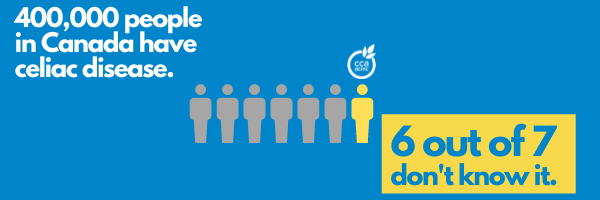
400,000 Canadians Could Have Celiac Disease Without Knowing It
May is Celiac Disease Awareness Month in Canada – May 16th is International Celiac Awareness Day
Mississauga, May 16, 2022 – On Celiac Disease Awareness Day, the Canadian Celiac Association (CCA) says as many as 400,000 Canadians could be living with the auto-immune condition, undiagnosed.
“I’ve got this brain fog …”
“Why am I so tired all the time?”
“My whole body aches – but my doctor can’t say why. I’m so frustrated!”
These are the kinds of situations being endured by possibly thousands of Canadians. The question that should be asked more often: “Could it be celiac?”
Celiac disease is a genetic autoimmune condition where your body sees gluten as an invader, causing your immune system to fight back to destroy the gluten protein found in foods containing wheat, barley or rye. Over time, this immune reaction damages the lining of the small intestine, preventing nutrients from being properly absorbed into your body. This can lead to a wide variety of complications and symptoms, and even serious long-term illness.
“We call celiac the ‘chameleon disease,’ because it can manifest itself in so many different ways, causing symptoms which might seem completely unconnected to the digestive system,” said Melissa Secord, National Executive Director of the Canadian Celiac Association (CCA).
Because of its wide range of symptoms, people with celiac disease might not even consider it as the cause of their ailments, and it’s often not top-of-mind for physicians trying to diagnose the problem. It’s estimated that 85 per cent of Canadians who have celiac disease have not been diagnosed – representing more than 400,0001 people – even though a simple blood test could identify it.
“Too many people are suffering and frustrated, but it doesn’t have to be that way,” Secord says. “More people need to ask their doctor, ‘Could it be celiac?’”

REAL LIFE CELIAC STORIES
Canadian speed skater Christine Nesbitt is an eight-time World Champion the winner of two Olympic medals. As a high-performance athlete, she spent her career under the watchful eyes of coaches, doctors and nutrition specialists. Yet she endured pain and discomfort caused by celiac disease for five years before anyone spotted it.
“As an elite athlete, I was always physically and mentally pushing myself. I experienced a lot of digestive, nutritional and skin issues, but they were always thought to be from the fatigue and rigour of training, and the stress of racing,” Nesbitt said.
“I thought, ‘my iron is low because I train so much and I need to eat more iron-rich foods,’ or ‘I’m fatigued and maybe I’m not eating well enough’ or ‘I pushed myself too hard in some of my training sessions.’ Being tested for celiac disease wasn’t on anyone’s radar for years and years.”
COULD IT BE CELIAC?
If you think you might possibly have celiac disease, take the symptom checklist.
The information it provides can help facilitate a more informed discussion with your doctor. The blood test to screen for celiac disease is covered under all public health insurance plans in all provinces except for Ontario where it is temporarily covered under a pilot program until March 31, 2023.
While there is no cure for celiac disease, it can be effectively managed by eliminating gluten from the diet. The Canadian Celiac Association has partnered with Promise Gluten Free to help promote options for people with celiac disease.
“Going gluten-free isn’t the end of the world anymore,” says Mohamed Safieddine, Commercial Director, Canada for Promise Gluten Free. “There are great tasting, fibre-rich breads, tortillas, pitas and more out there to help you eat well and stay healthy.” Promise Gluten Free is the official sponsor for Celiac Awareness Month.
CELIAC AWARENESS DAY – “SHINE A LIGHT” ILLUMINATION LOCATIONS
On Monday, May 16th, iconic buildings all over the world will be lit up in green to raise awareness for International Celiac Disease Awareness Day. Canadian sites that will be bathed in green light are:
City Hall – Dieppe, NB (all of May)
City Hall – Charlottetown, PEI
Ottawa Sign (ByWard Market), Shaw Centre – Ottawa (May 16-20)
Toronto Sign, CN Tower – Toronto
Niagara Falls (10 p.m. May 16)
Cambridge Sign – Cambridge, ON
Winnipeg Sign (Forks), Manitoba Legislature – Winnipeg
High Level Bridge, Hotel McDonald, Epcor Tower – Edmonton
Sherwood Park Community Centre & Festival Place – Sherwood Park, AB
Calgary Tower – Calgary
BC Place, Science World, Burrard Bridge, City Hall – Vancouver
About the Canadian Celiac Association
The Canadian Celiac Association’s vision is to see every Canadian with celiac disease is diagnosed and empowered. Since 1973, the CCA has been increasing awareness of the disease, investing in research and providing programs to support people with gluten disorders with help from local chapters across Canada in most major cities.
About Promise Gluten Free
Promise Gluten Free offers an irresistible range of gluten free breads, crafted using a unique bread-making technique that delivers excellent taste and quality. From Soft White Loaf to its tantalizing Brioche Loaf Promise Gluten Free offers the finest, delicious, nutrient-rich, baked goods that everyone will love.
All produced from the Promise Gluten Free family-run, dedicated gluten free bakery which has over 50 years of craft baking expertise and are available in Canada Nationwide via our online shop, Real Canadian Superstore; Avril; IGA; Saskatoon CO OP; Farm Boy; Food Basics; Thrifty Foods; Sobeys Urban; Safeway; Freshco; Foodland and some Metro’s and Wholefoods.
To find out more details please check out our website www.promiseglutenfree.ca
1. It is conservatively estimated that 1% of the population has celiac disease, or 386,815 Canadians. Of them, only 15% (58,002 people) are diagnosed, leaving 328,793 Canadians who likely have celiac disease but are not yet diagnosed.
Health Canada wants your thoughts on on-line food purchases
During the COVID-19 pandemic, many Canadians increased their online grocery food purchases. For people with celiac disease, knowing what is safe for them to order is critical. People need to be able to clearly know what is in the ingredient list before they purchase. CCA has been a vocal stakeholder on the issues of surrounding online food purchases raising the issue with officials and at Health Canada Food Summit meetings.
Please take a moment to help share your online food shopping experiences with Health Canada by July 9, 2022
Read here to learn more about the public consultation and to read the proposed guidance.
Take the survey here.
-Posted May 11, 2022
Newly funded celiac blood tests will help close the gap to diagnosis, increase access to treatment.
85% of people at risk for celiac disease are likely undiagnosed.
April 4, 2022, Mississauga, ON. The Canadian Celiac Association (CCA) hopes that an Ontario Ministry of Health pilot program which includes providing funding for crucial blood tests for celiac disease will be made permanent, to ensure ongoing screening of the 1 in 117 Ontarians at risk for the autoimmune disorder.
The pilot announced last November has been officially extended until March 31, 2023 and allows Ontario residents to be screened for celiac disease among other tests at an approved community-based laboratory, at no cost to the patient.
“Ontario has the unfortunate distinction of being the only province in Canada that does not cover these vital tests through the provincial health insurance plan,” says Melissa Secord, National Executive Director of the Canadian Celiac Association.
“We are hoping that the Ministry of Health will see the tremendous value in offering the free tests at community labs, not only by shrinking the gap to diagnosis but reducing up to 10 years of health decline which people with celiac disease can endure.”
“That could improve the quality of life for the estimated 100,000 Ontarians at risk for the disease and could generate potential savings for the health care system of as much as $125 million over the same period.[1]”
Celiac disease – a genetic autoimmune disorder where gluten, a protein found in wheat, rye, and barley, causes an inflammatory response damaging the intestinal lining – frequently goes undiagnosed. The cost of the tests span from $65 to $150 depending on what is ordered, which is a deterrent for many Ontarians on low or fixed incomes. Celiac disease is genetic, so the potential cost to a family of four to get screened is over $400. The tTg IgA and IgA blood tests are recognized internationally as the first step to clinical diagnosis.
“If we can get permanent OHIP coverage, the tests will be added to the regular laboratory requisition form used by family doctors. Right now, the tests are not listed because historically they are paid for by the patient. Celiac blood tests are often missed by health practitioners when selecting blood work to screen for health problems,” Secord said.
“Prior to the pilot, the only way to have the tests covered was to be hospitalized. Given the current pressure on the health care system from COVID-19, this is not an appropriate use of hospital services and resources, nor good care for patients. In addition, health care dollars were being wasted on needless trips to multiple practitioners, emergency rooms, and on expensive inappropriate tests such as ultrasounds, x-rays and other blood work.”
Delays in diagnosis of celiac disease can lead to malnutrition, osteoporosis, neurological problems, reproductive issues, arthritis, other autoimmune diseases, and even cancer.
To learn more about the pilot, understand your risk for celiac disease and to take our Symptom Quiz, click on the links below.
The Canadian Celiac Association’s vision is to see every Canadian with celiac disease is diagnosed and empowered. Since 1973, the CCA has been increasing awareness of the disease, investing in research and providing programs to support people with gluten disorders with help from local chapters across Canada in most major cities.
[1] Calculations are based on 100,000 Ontarians estimated to be undiagnosed celiac disease factoring in cost of treatment of average health complications.
McMaster University launches research study to investigate adverse events post- COVID19 vaccine in patients with a diagnosis of celiac disease compared to the general population
Vaccines protecting against coronavirus (COVID-19) have raised many questions from people with celiac disease, who are concerned about the risk of developing severe consequences.
There is no data comparing the frequency of adverse events post-vaccination in people diagnosed with celiac disease compared with the non-celiac population.
In collaboration with other experts from different countries including Canada, the United States, Italy, Spain, Germany, the Netherlands, Mexico, Argentina, Brazil, Uruguay, New Zealand, Australia, and the United Kingdom, we have developed a short survey related to COVID-19 vaccines in celiac and non-celiac populations.
We would like you to share with us your experience with COVID-19 vaccines, symptoms developed post-vaccination if you are vaccinated, or your concerns related to vaccination if you are not vaccinated.
The completion of this survey is voluntary, and you may skip a question that you do not feel comfortable answering. No identifying data will be collected through the survey questions, therefore all data collection will be anonymous.
Consent to participate in this survey-based study is implied by clicking on the link to the survey or completing the survey. You may stop at any time and not submit the survey. However, once the survey is submitted, data may not be withdrawn and it is stored anonymously.
We anticipate it will take 3-5 minutes to complete.
CCA Weighs in on New Standards for Long-Term Care in Canada
Long-term care (LTC) is for people requiring accommodation who can no longer live safely on their own. The facilities provide, high levels of care, 24-hour nursing care, meals, and housekeeping, along with social and recreational activities for their residents.1
In the fall of 2021, the Prime Minister directed the federal Minister of Health to undertake a commitment to improve the national standards for long term care homes in Canada.
The standards review has been assigned to a joint initiative by The Standards Council of Canada (SCC), Health Standards Organization (HSO) and Canadian Standards Association (CSA Group) to design, “two new national standards for LTC that will be shaped by the needs and voices of Canada’s LTC home residents, workforce, local communities, as well as broader members of the public.”2 The public consultation process was open from January to March 27, 2022.
In 2018, the CCA studied 52 long term care facilities of varying sizes to assess the accessibility of the gluten-free diet in these facilities. CCA also led a patient survey alongside to weigh patient or caregiver satisfaction levels of accessing and receiving care. Our study, that has been submitted for poster presentation at the 2022 International Celiac Disease Symposium in Italy, concluded that availability of LTC facilities that provide safe GFD is limited. Food preparation practices are sub-optimal, with potential risk of gluten cross-contamination.
With this study in hand, CCA has submitted its formal feedback as part of the consultation urging that the right to safe, properly resourced gluten-free be part of the revised standards. People with celiac disease deserve safe, accessible care at their most vulnerable point in life. Strategies and training need to be developed to properly educate various food service providers in LTC facilities and CCA has offered its expertise to help with this education.
CCA has offered comments on the following 10 sections of the standard:
- Governing LTC Home’s Strategies, Activities, and Outcomes
- Promoting Resident-Centred Care with a Compassionate, Team-Based Approach
- Providing a Welcoming and Safe Home Environment
- Respecting Residents’ Rights
- Enabling a Meaningful Quality of Life for Residents
- Delivering High-Quality Care Based on the Life Experiences, Needs, and Preferences of Residents
- Enabling the Delivery of High-Quality Care through Safe and Effective Organizational Practices
- Coordinating Care and Integrated Services
- Enabling a Healthy and Competent Workforce
- Promoting Quality Improvement
CCA President issues letter to Minister of Public Safety regarding access to gluten-free food for people with celiac disease in quarantine. – December 7, 2021
CCA Executive Director weighs in on woman with celiac disease who went 40 hours without food in quarantine.
Celiac Blood Test Covered by OHIP for next 5 Months in Ontario
After 10 years of advocacy work by staff and volunteers the Canadian Celiac Association (CCA) National office, we are pleased to share a new pilot program by the Ontario Ministry of Health will cover the cost of initial blood screening to help diagnose celiac disease (CD) in Ontario at any approved community-based laboratory. The dates for the Pilot Program are November 1, 2021 – March 31, 2022.
Ontario has been the ONLY province in the country not to cover the blood screening test for CD. This is despite the tests being part of standard clinical practice around the world. The announcement was made in a November 1 Info Bulletin.
CCA Advocates for Allergen Labelling on Natural Health Products
Over the past four years, CCA has been one of the major stakeholders working with Health Canada to help advance the introduction of priority allergen labelling including gluten on natural health products. This is a major milestone and innovation according to Health Canada representatives in a recent online session for the launch of the new clear and plain language labelling regulations. Up and until now, natural health products were not required to list any allergen, gluten, or aspartame ingredients leaving the celiac community for serious adverse reactions to products they were ingesting to help improve health. Allergen and gluten identification is now seen as high priority for Health Canada as it reviews new regulations thanks to the work of stakeholders.
“CCA was pleased to be an important stakeholder at the table over the past number of years to help offer our community’s perspective on the importance of clear labelling for people with adverse reactions to gluten. We are pleased to support the regulatory changes to have clear allergen and gluten warnings on natural health products – a long overdue change. We hope the government will move forward with the proposed amendments but also review our additional recommendations for better testing and monitoring, improvements to online retail sales and allergen and gluten disclosures on prescription medications.” – Melissa Secord, National Executive Director
After the public consultations are completed, the government will review the feedback and make its recommendations to the Treasury Board for approval and publish in the next year.
CCA addresses celiac disease patient challenges to Ontario medical round table
The Ontario Medical Association (OMA) recently sought recommendations from a wide range of stakeholders from patients, other health care professions, and patient groups like the CCA. They are developing recommendations to table with the Ontario Government to help drive key themes to transform the healthcare system which is broken and strained under the weight of the pandemic. Their theme- It’s time to Recover, Rebuild and Rebuild Smarter.
Click HERE to learn more about the OMA recommendations and key points addressed by the CCA.
CCA Resources Now Available in Punjabi and Arabic
TORONTO, June 16, 2021 (GLOBE NEWSWIRE) — As part of its ongoing effort to help Canadians suffering with celiac disease in the country’s diverse ethnic communities, the Canadian Celiac Association (CCA) today announced the release of Punjabi and Arabic language versions of its “What is Celiac Disease” and “Living Gluten Free” brochures. Both resources provide the Canadian Arabic and Punjabi communities with vital information about the disease, getting tested and dietary tips.
Click to learn more about the Punjabi resources. Click to learn more about the Arabic resources.
Listen to Shelley Case on CBC Regina radio on celiac disease
Lighting Up the Night for Celiac Disease on May 16th
International patient organizations unite to raise awareness of genetic autoimmune disease.
MISSISSAUGA, Ontario, May 13, 2021 (GLOBE NEWSWIRE) — On Sunday, May 16, iconic buildings all over the world, including those in Toronto, Vancouver, Montreal, Boston, Edmonton, Nashville, and New York City, will be lit up in green to raise awareness for International Celiac Disease Awareness Day. Among the Canadian buildings that will be bathed in green light are the CN Tower (Toronto), Olympic Stadium (Montreal), Prairie Wind at Riverplace (Saskatoon), Calgary Tower (Calgary), Epcor Tower (Edmonton) and BC Place (Vancouver).
Click here to learn more.
Shine A Light on Celiac International Site
CCA is setting the record straight – celiac is not pretend
TORONTO, May 03, 2021 (GLOBE NEWSWIRE) — May is Celiac Awareness Month and the Canadian Celiac Association (CCA) is setting the record straight for Canadians suffering with celiac disease.
CCA adds patient voice to Agriculture Canada and Agri-food review of Canadian Grains Act
Access to safe food starts with the safe growing practices for gluten-free grains and ensuring their safe distribution and handling along the food production cycle.
Click to read submission. Click to view Agriculture Canada Consultation
April 30, 2021
Canadian Celiac Association Joins Glutino on Easter ‘Save Me for Gluten-Free’ Food Drive
MISSISSAUGA, Ontario, March 31, 2021 (GLOBE NEWSWIRE) — As the Easter long weekend approaches, the attention of Canadians will soon turn to preparing special ‘bubble-safe’ dinners with loved ones, but for people with celiac disease, who also rely on food banks, this time of year painfully underscores their struggle to source safe food, a problem made worse by the pandemic. Click to learn more.
-March 31, 2021
Canadian Celiac Association Launches Holiday Survival Campaign with Nairn’s
Resources Address Gluten-Free Food Insecurity, Dietary Guidance and Mental Health Challenges During Pandemic – Click to read more.
-December 17, 2020
CCA’s Professional Advisory Council issues statement on celiac disease and COVID-19
The novel Coronavirus has caused some questions among many groups including people with celiac disease. Click to learn more.
-December 15, 2020
Canadian Celiac Association offers up to $30,000 for celiac disease research
Requests for research proposals are now open to February 15, 2021 Click to learn more.
-December 2, 2020
Is gluten a problem?
If gluten is a problem for you, it could be celiac disease. CCA teamed up with the Toronto Star and other digestive health disorder groups to raise awareness. Click to learn more.
-November 28, 2020
CCA celebrates the life of Dr. Oats
Vernon Burrows, an Officer of the Order of Canada, passes at age 82 leaving a legacy of the first gluten-free oats in the world.
-November 19, 2020
A Canadian research team conducts first global study of COVID-19 and Celiac disease
Canadian Celiac Association partners with McMaster University
At the advent of the COVID-19 pandemic, a team of researchers from McMaster University—in partnership with the Canadian Celiac Association (CCA)—sought to determine if people with celiac disease were at an increased risk of contracting COVID-19. This is the first large-scale global study of its kind and was led by Dr. Maria Pinto Sanchez at McMaster University.
Click here for link to release on wire service
Meet the new CCA President
CCA’s new President, Janet Bolton, and Executive Director, Melissa Secord had a chance to share some of the exciting work of the CCA over the past summer and upcoming fall with Sue Jennett on her “A Canadian Celiac Podcast.” Sue is the president of the CCA Kingston Chapter and offers a regular podcast that often features CCA thought leaders and updates.
Click here to listen to Janet Bolton http://bit.ly/Ep138CCAPresidentJanetBolton
Click here to listen to Melissa Secord – http://bit.ly/Ep135CCAUpdate
CCA Professional Advisory Council releases statement on gluten in medications
Gluten in Medications – Published July 2020
July 7, 2020
Health Canada warns Canadians with celiac disease and gluten disorders on products originally destined for the United States
CCA and Coeliaque Quebec alerted Health Canada about issues with its decision in April in response to the COVID-19 outbreak to allow Canadian manufacturers of food service items destined for the United States to be sold in Canada. The concern is specific to products made with barley or rye. In the United States, only the top eight allergens are listed by their plain name and rye and barley are not one of them. The issue is mainly with barley as ingredients such as malt or yeast extract, which are derived from barley, would not necessarily be known by consumers to contain gluten. Health Canada has issued an advisory to manufacturers to ensure their redirected products are labelled correctly but there is a risk that products could be missed. CCA recommends consumers be alert to larger-sized packaged foods and/or with English only labels to help identify these US products. Although they feel the risk is low, Health Canada has issued a consumer advisory.
June 15, 2020
CELIAC ORG TO REPLENISH CANADA’S FOOD BANKS WITH GLUTEN-FREE OPTIONS DURING PANDEMIC
Canadian Celiac Association (CCA) Partners with Promise Gluten Free
TORONTO, May 15th, 2020 – For Canadians with celiac disease who are increasingly relying on food banks during the COVID-19 pandemic, securing gluten-free foods has become more difficult than ever.
-May 15, 2020
CCA surveyed thousands of Canadians with celiac to see what they know about oats.
-May 2020 – Click for summary of results
Food Labelling for Some Barley Based Ingredients
The Canadian Food Inspection Agency (CFIA) has recently issued an advisory to allow some food products to be sold in Canada that were previously destined for the United States market.
While health and safety related labelling requirements such as Canada’s enhanced labelling regulations for gluten sources still apply, CCA has flagged some potential issues with BARLEY. There is a potential risk that food produced in Canada but packaged and labelled for the United States might not identify barley containing ingredients, as required on food sold in Canada. Consumers and purchasers should be alert to malt and yeast extract ingredients listed on US labels. Malt is barley based. Yeast extract can be found in soups, sauces, seasoned chips and other savoury products.”
CCA Notice of Annual General Meeting
The CCA will be holding its Annual General Meeting in accordance with its bylaws on Saturday, June 6, 2020 via online meeting. Only voting chapter members and National Directors are required to attend. Special guests may be included but must be requested in advance to the CCA President. Please contact president@celiac.ca
-May 8, 2020
Gluten-free Campaign Asks, “How Do You Sandwich?”
-May 5, 2020
Celiac Campaign Delivers Relief To Canadians Living With Condition During Pandemic
Canadian Celiac Association (CCA) Launches Resources to Help Canadians Navigate COVID-19.
-April 30, 2020
CCA offers new resources for food banks and list of locations for those in need
CCA National teamed up with its local Chapters to identify food banks and agencies offering gluten-free food along with developing resources for food banks that would like to support our food at risk individuals. Click here.
-May 1, 2020
Ottawa gluten-free verified dining establishment adapting through COVID-19
CTV Ottawa took time to feature Ottawa’s La Dolce Vita on how it’s thriving during COVID-19 and offering delicious and safe gluten-free food. Check video here.
April 22, 2020
CCA included in over 200 charities seeking protection during COVID-19 outbreak
Over 200 major charities form Emergency Coalition to save sector and maintain support to Canada’s most vulnerable. Click for more.
COVID-19 resources
CCA has developed a special page to host our resources for the Canadian gluten-free community. Click here.
Food Insecurity and celiac disease
During this difficult time, people with celiac disease may find themselves losing their jobs, facing financial challenges and need to access a local food bank or service agency. Click here to learn more.
Oats Research Survey
The Canadian Celiac Association’s Professional Advisory Council would like to learn more about the oat consumption of Canadians who must eat gluten-free. The survey will only take 1-2 minutes.
Deadline: March 25, 2020
CCA National Board seeks directors for 2020-2022
The Canadian Celiac Association (CCA) is seeking nominations for positions whose terms will run from appointment to June 30, 2022. Click here for details. – January 12, 2020
Dr. Mohsin Rashid on the key differences between celiac disease and a wheat allergy
Celiac disease, Wheat allergy… what’s the difference? While symptoms can overlap, celiac disease and wheat allergy are two distinct disorders. Click here to read.
NHL draft prospect shines light on success after diagnosis
“He’s got to the stage where it’s under control,” said Marr, whose department lists Kakko as the top European prospect. “He knows what his limits are. He knows what he needs to do to be at 100 per cent. As long as (his diet) is managed and well managed, I don’t think it’s going to influence the decision on draft day.” Click here to read the story.
-June 20., 2019
CCA Pushes For OHIP Coverage of Celiac Blood Test, Amongst Other Awareness Day Initiatives
For International Celiac Awareness Day, the Canadian Celiac Association (CCA) plans to meet at Queen’s Park at 10:30 a.m. to call on MPPs to support OHIP coverage for the IgA TTG serological test for celiac disease. Click for details.
-May 16, 2019
National survey to study confidence in ‘May Contain’ food labelling in Canada
Celiac association asks gluten-free consumers and dietitians to weigh-in
Mississauga, ON – The Canadian Celiac Association (CCA) as part of its May Celiac Awareness Month activities launched a nation-wide survey of gluten-free consumers and dietitians to gauge the confidence and understanding of the use of the ‘May Contains’ labelling on Canadian food products. Click for more.
-May 10, 2019
Daytime CBC Radio – Not even a crumb of gluten, living with celiac disease.
Listen to this great interview with Montreal pediatric gastroenterologist, Dr. Terry Sigman, and her 11 year old patient on the challenges of diagnosing and managing celiac disease.
May 3, 2019
CCA launches national ‘may contain’ labelling survey for gluten-free consumers
The Canadian Celiac Association’s Professional Advisory Council has launched a research survey to better understand consumers who require a gluten-free diet and their attitudes towards ‘May Contain’ labelling on food products sold in Canada.
-May 2, 2019
New Labelling Requirements Coming to Beer
CCA among key stakeholders that called for changes to beer labelling to protect consumers.
Mississauga, ON. May 1, 2019 – The Canadian Celiac Association (CCA) is lauding the announcement today from Health Canada and Canadian Food Inspection Agency that a part of the new compositional standards for beer will be a requirement for allergy labelling including gluten by December 14, 2022.
-May 1, 2019
Delays in celiac disease diagnoses costly for Canadians
Canadian Celiac Association (CCA) Launches Symptom Quiz to Help Undiagnosed Canadians Avoid Years of Unnecessary Suffering
-May 1, 2019
CCA releases guidance for primary care providers on the gluten challenge to improve diagnosis rates
How much gluten must be consumed by a patient after being on a gluten-free diet (GFD) in order to be accurately tested for celiac disease? Learn more.
-April 15, 2019
Canada’s iconic buildings to display green for Celiac Awareness Month this May
May is Celiac Awareness Month in Canada and May 16 is internationally recognized as Celiac Awareness Day. This year five major cities across Canada will display green lights to mark the occasion. Click here for details – April 2019
Young adults and their food choices study
The laboratory of Dr Anne-Sophie Brazeau of School of Human Nutrition at McGill University is currently looking for adults with and without type 1 diabetes who are 18 to 29 years old to participate in a study on food literacy. The main objective of the project is to understand the motivations and barriers of young adults with type 1 diabetes in integrating their knowledge of nutrition into practical skills. This study involves answering a questionnaire lasting about 25 minutes.
CCA responds to proposed amendments to Canada’s vodka standards
CCA’s Response to Proposed Changes to Vodka Standard. -March 14, 2019
CCA is hiring.
We’re looking for a Fund Development Coordinator. Click here to learn more. – March 13, 2019
CCA urges changes to federal taxes before federal budget
CCA President issued a letter during the pre-budget consultations to Finance Minister Morneau. Read the letter here. -March 2019
CCA releases results of Agri-Food Canada funded study for access to gluten-free grains
CCA releases project highlights for enhancing access to Canadian sources of certified gluten-free grains and testing protocols. Read more… – February 4, 2019
New Canada Food Guide: What is the impact if you are gluten free?
Health Canada released its new Food Guide to public. For Canadians who require a gluten-free diet, CCA offers direction on key nutrients and food sources that need to be carefully managed. Read more… – January 23, 2019
CCA wants to know what is your Celiac IQ?
Would you know how to accurately diagnosis celiac disease? This is the question CCA is asking Canadian healthcare professionals at the Family Medicine Forum being held in Toronto this week. Learn more and take our test. -November 14, 2018
CCA National response to proposed amendments to beer composition standards
As the voice for people adversely impacted by gluten, CCA has issued its formal response to the proposed changes to beer composition standards. Click link for CCA Response Click to view proposed amendments -September 7, 2018
Management of Bone Health in Patients with Celiac Disease: A Practical Guide for Clinicians
The Canadian Family Physician Journal has published a review article to be used as a practical guide for clinicians when managing and monitoring bone health in patients with celiac disease. -June 14, 2018
Health Canada Report on Celiac Disease
Health Canada published a report on celiac disease and the gluten connection to increase awareness for Celiac Awareness Month. The report discusses prevalence, risk factors, symptoms, diagnosis and treatment. -June 4, 2018
Minister of Health’s Statement on Celiac Disease Awareness Month
The Minister of Health made a statement in support of celiac awareness month. She discusses the large impact the disease has on an individual’s quality of life and how it affects a large portion of the population. Read it here. -May 29, 2018
Lack of OHIP coverage for celiac test causing costly increases in treatment delays and health risks for Ontario patients
Adult patients in Canada with undiagnosed celiac disease can expect an average delay of 11 years before receiving an accurate diagnosis of their condition,1 while the typical delay for children is 1 year. 2 Celiac disease – an autoimmune disorder triggered by the consumption of foods containing gluten (a protein found in wheat, rye and barley) — affects 1 in every 100 Canadians, but only 10 to 20% of patients with the disease have been diagnosed.3 It’s a situation the Canadian Celiac Association (CCA) is aiming to change, especially in Ontario, which is the only province that currently doesn’t cover the blood test necessary for detecting celiac disease under its provincial health insurance plan. -May 3, 2018
Canadian Celiac Association is asking Canadians to #GoBeyondTheGut
May is Celiac Awareness Month and the Canadian Celiac Association (CCA) is urging people to #GoBeyondTheGut and to be alert to the “atypical” (non-classical) features of celiac disease. -May 1, 2018
Update: Sobeys Inc. Sensations by Compliments brand Pecan-Crusted Cheesecake Collection Reinstated Quickly
On April 4 2018, with the assistance of the Canadian Food Inspection Agency (CFIA), Sobeys initiated a recall for their Sensations by Compliments Brand Pecan-crusted Cheesecake Collection from the marketplace because it contained wheat which was not declared on the label. Click the link for update. -April 4, 2018
Ontario Legislature petition for celiac blood testing
Ontario is the only providence in Canada that does not cover blood screening under provincial health insurance unless it is specifically performed during an in-patient hospital visit. People with Celiac disease didn’t choose to have this disease, they deserve to have the test covered by OHIP. Delayed diagnosis causes lack of treatment which leads to nutritional deficiencies, bone fractures and the development of cancer. It also leads to the risk of developing mental health problems. When a person with celiac disease is diagnosed early, the individual’s health returns to the normal rate, it reduces their visits to doctors and hospitals and unnecessary diagnostics testing. Ontario Provincial health coverage (OHIP) for IgA TTG serological test for patients with Celiac disease. Please download our petition, get your friends and family to sign it and either mail it back to the CCA or send it to your local MPP (original signatures only, photocopies or scanned petitions will not be accepted).
CCA issues statement on NIMA gluten sensor
The Canadian Celiac Association’s Professional Advisory Council (PAC) was asked to review the NIMA Sensor device as it was recently launched in Canada. -March 15, 2018
Stay heart healthy and gluten free – tips from Dr. Jennifer Zelin
Having celiac disease can make healthy eating a challenge. The dietary restrictions of a gluten-free diet, and the symptoms from recently diagnosed celiac disease, can make it difficult to choose healthy dietary options and maintain physical fitness. Dr. Jennifer Zelin shares some tips… -February 15, 2018
Gluten-free claim to be removed from General Mills Cheerios sold in Canada (Revised)
The Canadian Celiac Association has learned that the words “gluten-free” will be removed from all Cheerios packages sold in Canada commencing January 2018. -October 26, 2017
CCA response to CFIA Beer Consultation
In July 2017, the CCA was invited to comment on our concerns with beer labelling. Members of our Professional Advisory Council prepared a response on behalf of the CCA Board of Directors. -July 2017
Deep Frying Gluten Alert
The myth that frying wheat products makes them gluten-free is endangering people with Celiac disease. -April 2017
Canadian Celiac Association Professional Advisory Council position statement on consumption of oats by individuals with celiac disease
The safety of oats in individuals with celiac disease has been extensively investigated. Health Canada has reviewed the clinical evidence from numerous international studies and has concluded that the consumption of oats, uncontaminated with gluten from wheat, rye or barley, is safe for the vast majority of patients with celiac disease. -2015